Leading by Consensus-Building

I’ve read a lot of books and had a lot of teaching on leadership.  A leadership style that has always intrigued me is leading by consensus-building.  This means that decisions are not made democratically (by vote), or by a dictator.  You move ahead when everyone agrees.

I’ll give all of you who have ever worked in a group context a few moments to control your laughter.

I love the book The Poisonwood Bible by Barbara Kingsolver.  (If you have never read it, it is the story of a  “missionary” in the Congo, as told by his unfortunate wife and daughters.  It is a beautiful and frightening tale.)  There is much upheaval in the Congo at the time, and voting for political leaders has been imposed by colonial powers.  The villagers in the story don’t like making decisions this way, because then a large percentage of people will be unhappy with the decision.  Traditionally, the leader(s) would go around, gather support, discuss issues with many different individuals so that most people, if not everyone, would support the decision made.

Now, I love the idea of everyone agreeing on a course of action.  But in practice…  well, you’ve met people, right?  

But that is the way things work here.  I’ve watched through my time in Kigali and realized that suddenly announcing something in a meeting and expecting a favorable response is setting yourself up for failure.  (Too bad, becuase that way is so much more efficient!)  Because I have been in such a learning position, I have found myself going around and asking different people for advice before I have made decisions or announcements, even on things that are my initiative and within my sphere of authority.

I have realized that people actually like having input!  People like to have time to be prepared before things are announced in a group context.  Even those people who disagreed have felt like they were heard and their thoughts were important.  Often, people were much more supportive and willing to help with ideas.  (And ideas were definitely made better by including the wisdom of people who knew better than me.)

I have by no means mastered this, but I have begun to learn about how to actually work this way through my time at the YWAM Kigali base.  Sometimes, having many small conversations instead of one large one seems like a gigantic waste of time to me.  However, I have seen that in many ways my time is not as important as I tend to think it is, and this is a much BETTER way to lead.

Something from nothing

(Slow internet and frustrated key-mashing made me post accidentally before I had added the pictures. But here it is again, with pictures.)

tallonstales's avatarTallons' Tales Online

For most of our time here, it has seemed like our progress has been so slow, or nonexistent, and we are tied up in beauracracy.  When friends or staff from the Kigali base would come to visit, we would take them to see the land.  It felt a little silly: here’s some land, here are the water tanks, and here are a few garden beds.  (Of course, we were excited about these things, but it seemed a bit much to expect someone else to be excited about these things.)

But this week, two people who have been on staff in Kigali came to visit, and it was very different.

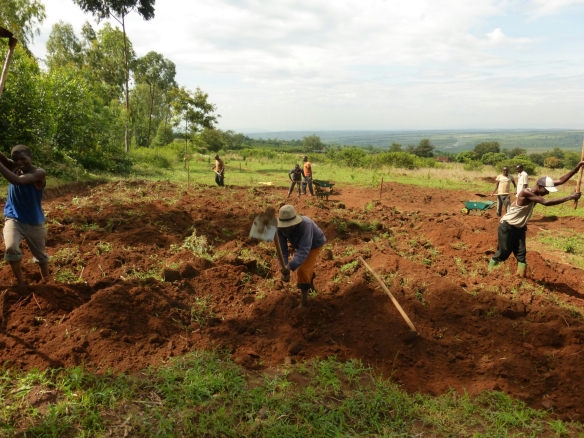
The first thing that was different, is that WE FINALLY GOT PERMISSION TO BUILD!  Wednesday was the first day we started working on levelling the ground for the clinic’s foundation.

foundation

The gardens were planted about a month ago, so things are…

View original post 155 more words

Something from nothing

For most of our time here, it has seemed like our progress has been so slow, or nonexistent, and we are tied up in beauracracy.  When friends or staff from the Kigali base would come to visit, we would take them to see the land.  It felt a little silly: here’s some land, here are the water tanks, and here are a few garden beds.  (Of course, we were excited about these things, but it seemed a bit much to expect someone else to be excited about these things.)

But this week, two people who have been on staff in Kigali came to visit, and it was very different.

The first thing that was different, is that WE FINALLY GOT PERMISSION TO BUILD!  Wednesday was the first day we started working on levelling the ground for the clinic’s foundation.

foundation

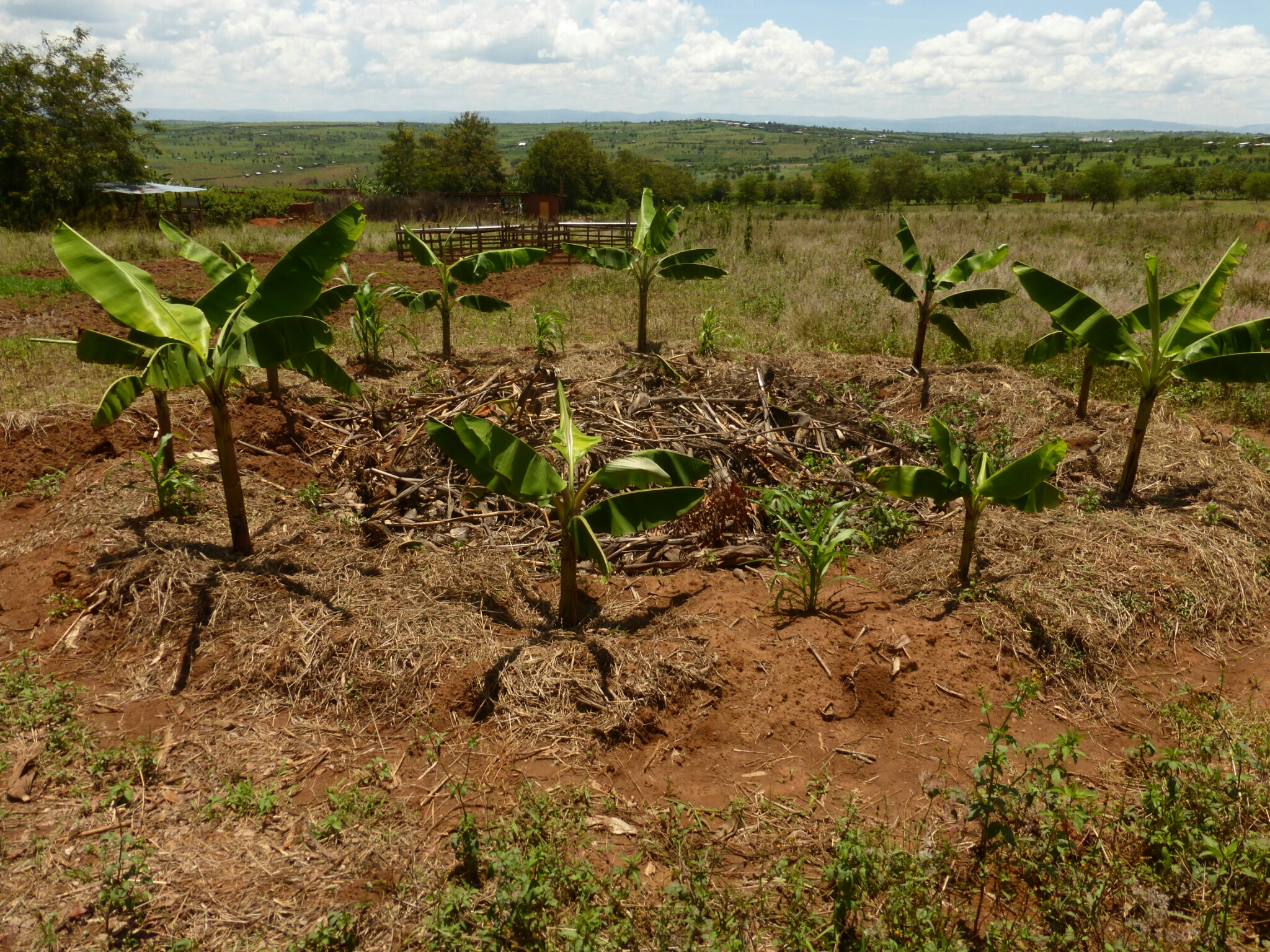
The gardens were planted about a month ago, so things are starting to come up, and the banana circles are growing swiftly.

banana circle

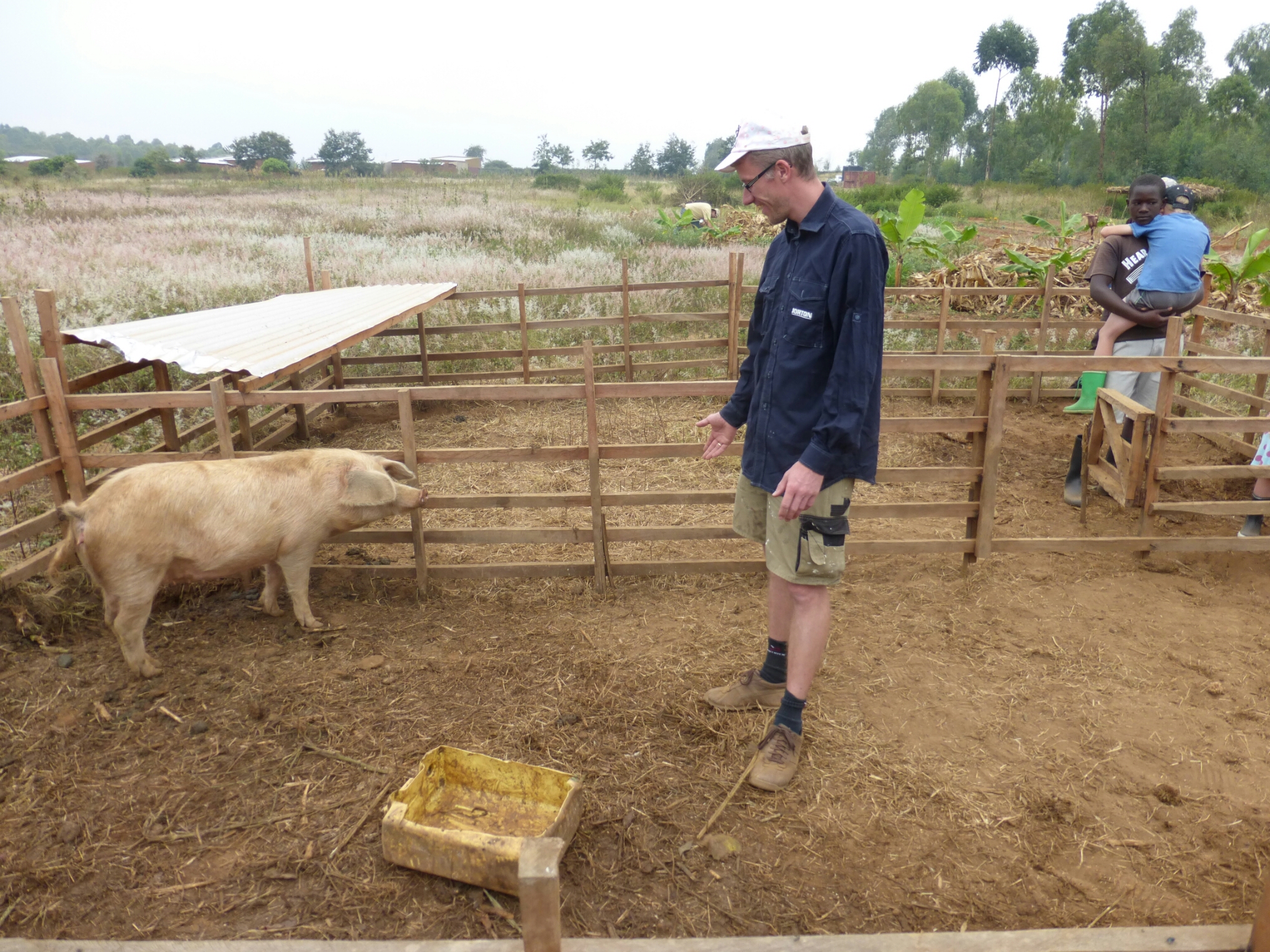
Last but not least, the animals.  I’m sure you remember the pigs?

pregnant pigs?

I think they are pregnant. (What do you think?) We’ll see.


A donation was made to purchase some cows.  The cows will also help to support some of the regular costs (diesel for the water pump, pay for the guards, etc.).  We have already been selling the milk.  (And have been buying some personally: its delicious.)

I  couldn’t believe how long it took to show our guests everything that is happening.  I still think its not totally reasonable to expect everyone to be excited about these small things.  (Here’s some dirt.  Here’s some people digging dirt.  And over here, are some animals wallowing in dirt.)  BUT, the understanding of what these things represent, and the recognition that the project is actually moving forward made this a really exciting day.

putting up sign

putting up sign


In Saskatchewan

We arrived in Saskatchewan in time to go to Edmonton with Mike’s family.  MIke’s dad, Jack, had an appointment with a surgeon to see if he had a treatment plan for Jack’s combination of aneurism, liver failure, and stomach cancer.

He did not.

We returned home and had several really good days with the family.  Jack was alert and apparently more energetic than he had been in quite a while.

On Saturday night, we cooked and ate a good family meal with Mike’s parents.

On Sunday morning, Jack woke up muddled, and by the time we got to hospital he slipped into unconsciousness as he went into organ failure.

On Monday evening, he breathed his last.


We are so thankful that we had this time with Jack and with family.  We recognize in this instance the faithfulness of God as he directs our travels – the faithfulness of God to us, and to our family.  (Because our being in Rwanda is a sacrifice for them, too, though they did not choose it.)


I have no better tribute to make to Jack than the eulogy that Mike wrote and delivered at his funeral:

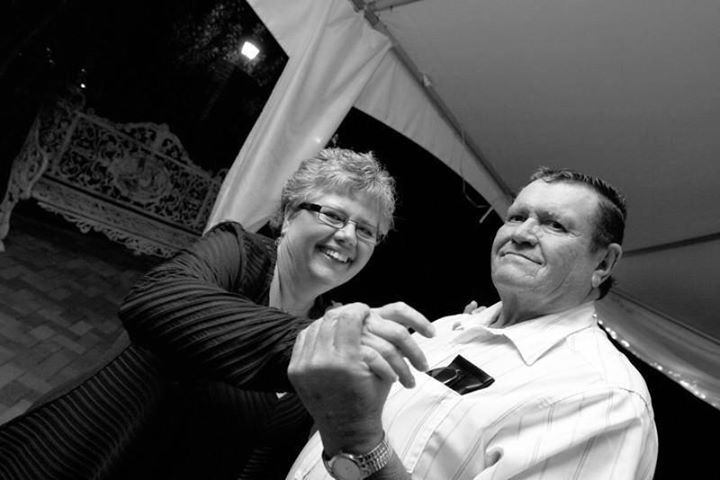
Jack, as he has been known for most of his life, was born the youngest son of Stan and Theresa Tallon in Lafleche, Saskatchewan. He was the younger brother of Pat Tallon who still remembers the day in July of 1949 when Stan phoned home announcing Pat would now have a baby brother.

When Dad was two years old, the family moved from in town, 7 miles south to the homequarter where the farm is today. Jack went to school at Harwood for his first five years of schooling and finished his education in the Lafleche high school in 1969.

After school, Dad worked in different jobs over the course of ’69 and ’70, in Shaunavon at a lumberyard, and in the oil fields, as well as working for a grain company out of Rush Lake. In the spring of 1970 Dad decided to head down to the States with a local custom combining outfit and, as I hear it told, had enough adventures to fill a book.  One story tells that as they were hauling the combines to their next job Dad somehow got turned into a small town that the highway passed through. After a much longer time then it should have taken to make it back to the highway, finally Dad appears with the combine covered in a full accompaniment of telephone wires…but apparently no worse for the wear himself!

After returning from his time down south Jack took up farming beside his own dad and brother. They would continue farming together until Stan Tallon passed away in 1988 and then right up until this last year when his own health was known to be failing (he was truly his father’s son because even then he would get out into the field every chance he got).

And Dad really loved farming, he appreciated that he was able to be his own boss and do things as he saw best. He appreciated being outdoors and the satisfaction that came from setting your hand to change an entire landscape from bare soil to abundant grain fields in a short growing season. He loved the people he lived and worked around, often lending a hand when neighbours were in a pinch or being present for the celebrations as well as the losses. And he really did believe that to be a farmer was an honest and dignified occupation… you work not only to feed your family but to feed the world beyond as well. And he was proud that he was a part of that.

Not long after establishing his own farm in the spring of 1971, Dad began to pursue a young woman named Beth Curry.  I’m told they first started ‘going steady’ after a summer street dance during a Lafleche Days celebration. It must have been serious because darned if Dad didn’t show up in Glentworth the next night where Beth just happened to be! Grandpa Tallon said that he suspected a pretty serious relationship was developing when he would observe Jack striking out the fields down on the flat.  The rows would slowly creep further into the center of the field, curiously nearer and nearer the Curry household. He continued to court this young lady until they married in the year of 1974.  My mom said he was her best friend.

By 1977, they had moved a house onto what is now considered their homequarter.

By 1984 Jack was the proud papa of three lively kids, myself, Holly, and Chris respectively. And I don’t think anyone ever doubted the pride he took in his family. All through our childhood, Dad carted us to every tournament, practise, and community event that we were involved in. He cheered at every chance and never begrudged his time spent waiting and watching our efforts.

I seldom saw Dad angry and am pretty sure I never saw him really mad. His patience coupled with his sharp wit and quick humour will be one of the things he is most remembered for. And his patience was tried to be sure when   one of his children (who will remain unnamed) got him out of bed early one weekend to trek all the way to Weyburn for a martial arts tournament, only to find a noticeable absence of crowds or cars anywhere we might expect this tournament to be. So he pulls into a 7-11 and what do you now there a poster inside declaring this tournament to be the following weekend! Needless to say, it was a long drive home and Dad had the grace to get up again the following weekend and make another go of it.

Not only did he have time for his own kids, he adored his nieces and nephews. I’ve heard tell that when my cousin Terri was about 2 years old she got her first nursing kit, and Dad sat through uncounted bandagings of his toes all to the joy of this nurse in training.

As young boys growing up on the farm, Jack and Pat would spend much of their free time hunting. Uncle Pat remembers walking together for miles, in the snow, hunting rabbits for hours on end. And that love of hunting didn’t wane, there were many meals of goose, duck, and deer and at least twice as many stories about his adventures chasing game.


(Mike ad libs, telling stories about

-Gull Lake hunting antelope

-Dad’s curious relationship with law enforcement)


The Bible speaks of how God wrote His laws on the hearts of men. And though Dad didn’t often talk about God with us… he was surely one of those men the Bible tells of. Jack Tallon spoke the good news of the gospel with his hands and feet while working in the field or lending a hand or making you laugh with a joke. He had a strong sense of justice.  I have heard of many instances where he stood up for others when no one else would.  You have to look no further then the legacy of his family and this community gathered here today to know that that’s true.

As I have sought to know God and make Him known in my travels, few have shown me the character of God more than my Dad. The Bible relates our welcome into the Kingdom of Heaven as an adoption into a mighty family, a grafting into a community where there was none before. And as I was physically adopted into the Tallon family, I can tell you there was never a moment when I felt less then Jack Tallon’s son…the love and pride he expressed never less than complete.

Dad celebrated well, and i think the best tribute we can give, is to share our stories and memories of him, all the times he made us laugh, in celebration of a life well lived.


10580201_10204020923739489_5726434687408950975_n

16313_10204020924019496_5533097502704112604_n


Growth

Its often difficult to see the effects of what we are doing.  Actually, let me rephrase: it is often discouraging to see that most of the things we do seem to have little or no effect.

A couple weeks ago we did another staff fundraiser.  As the area of communicating about their missions work and finances is an area that needs growth for most of the staff here, we started months in advance: preparing, encouraging, and teaching.  I timed my trips to Kigali over several months so that I could be there regularly for staff meetings to inform, plan, encourage, and answer questions.

I had expected that since this was our second time around, it would be much easier, and many of the staff would be more enthusiastic because they had an idea about what would happen.  I hoped that they would sign up right away, be prepared with people to invite, would come prepared with pictures/prayer cards to hand out, and would generally need less from me to make this happen.

A few days before I almost called the whole thing off.

 It was only the huge amount of work I had seen 2 staff put into it, plus my overwhelming sense of duty to do what I had said I would that convinced me to go to Kigali to do the final preparations a few days before the event.

Once I did get there, though, and considered carefully, I was amazed at how much the staff have grown, and how much we learned from the first time. Since I wasn’t in Kigali, there were a lot of things I couldn’t do myself in the preparation stages.  One of the staff members took over the job of point person in Kigali, and she communicated and got so many things done. And no, most of the staff didn’t observe the deadlines we made.  But we knew ahead of time that deadlines would be ignored, and so we set the deadlines much earlier than we actually needed things done.  (Eg, we didn’t need to know a month in advance how many people were coming, but by asking that early, when it came time to shop the day before, we had a pretty good idea.)  

Many of the staff who participated reluctantly or without understanding last year, were much more prepared and enthusiastic this year.  In addition, there was a handful of new staff who did a great job preparing and hosting people.

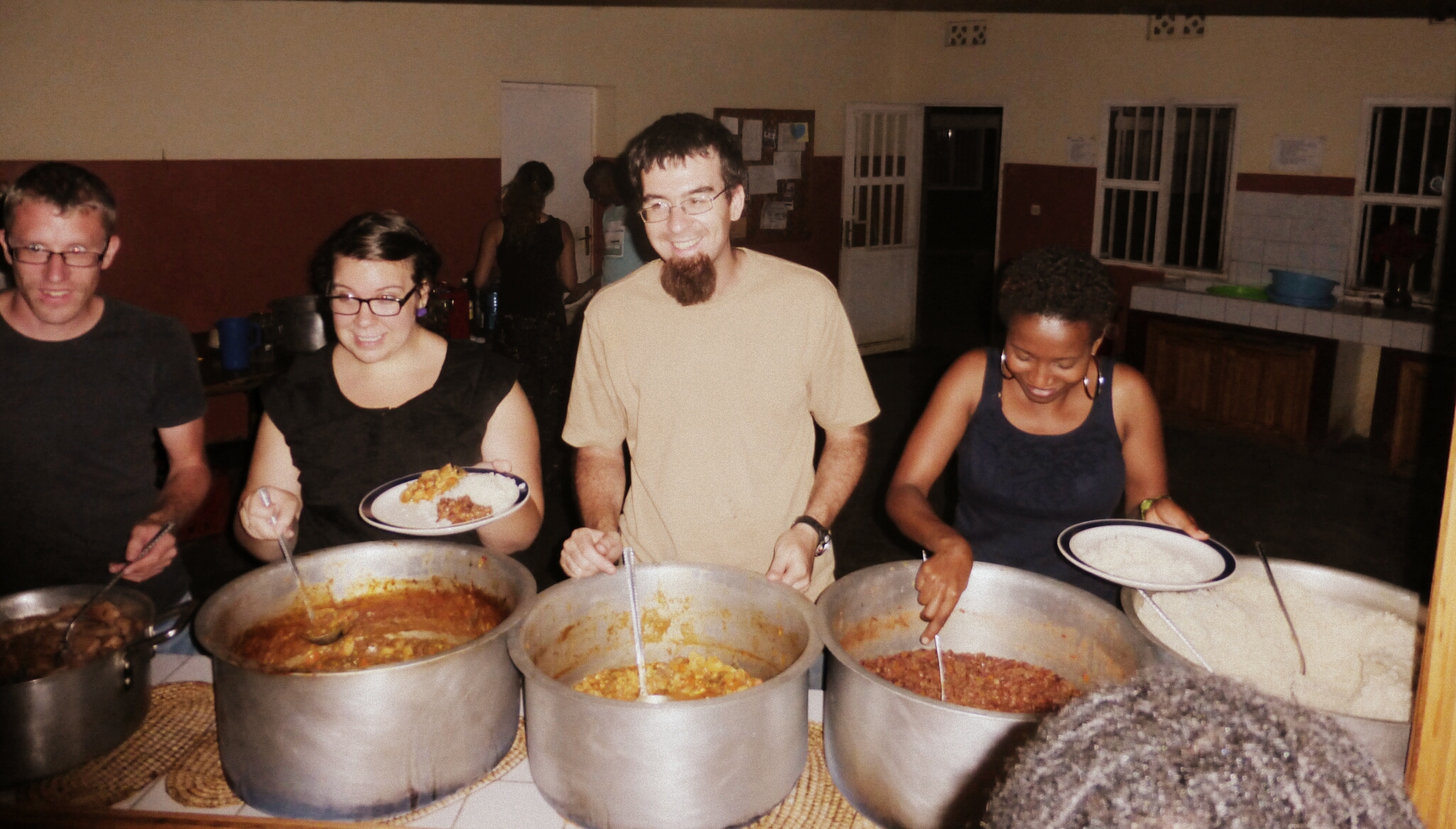
Mike and I also learned some things that made the event go much more smoothly this year.  Last year we made enough food for about 2 and half fundraisers.  This time we were close to running out (yikes!), but we had enough, and didn’t have all that extra!  We were better able to deal with things like wanting to prepare ahead, but not having enough fridge space.  We had  power outage near the beginning that left us without light, speakers, and drinking water, but people rose to the occasion to deal with these things (candles, a generator, and the store).

serving food 2014


I didn’t hear from everyone, but the people I did speak to were quite pleased with the outcome.  Several of them really felt like the people they invited understood this time.  They asked thoughtful, perceptive questions, and said things that showed it made more sense what these YWAMer’s are doing!  That was exciting, and a big part of the reason we do this.

Additionally, there were financial commitments made!  The follow through on these kind of commitments is never 100%, (which was one thing that left some of the staff discouraged after last year), but if there is SOME follow through, it could be a radical change for the financial situation of some of these staff members.

I’m thankful that the way I felt about this several days before was not reality, and for the ways I can see changes and growth because of some of what we have done!  

You never know, what you don’t know.

I have a whole host of things that I have learned about or become skilled at in the course of our missionary work.  Most of them are things that I had never imagined would be important skills (or even that such skills existed).

But Mike and I have gotten an education in the last few days, let me tell you.  First, a little background:

Our desire for the Mutara Development Centre is that the different aspects become sustainable – and so, self-supporting financially.  Some of the areas will automatically generate income, but with some areas, we will have to be a bit creative.  We need to have a guard at the property, all day and all night, to make sure (for example) that the water tap doesn’t get stolen again.  These guards need to be paid – but where would that money come from?

It was proposed to us that we could breed pigs: that it is fairly simple to breed them and easy to sell them.  So we bought a few pigs. We thought that we were buying 2 pregnant sows, but as the months went by and nothing happened, it became apparent that they were not pregnant. (How would we know, except for the fact that babies didn’t appear eventually?)

So one of our team members did some researching: how do you get a pig pregnant? (Obviously, you need a male, but beyond that:  How do you know when is the right time?  Are there things you can do to ensure large litters, etc?  How do you know if the attempt was successful?)

(This is one of many times when I am thankful that I am overseas in a time when we have internet access!!)

Yesterday, today, and tomorrow are the opportune time, apparently.

See that swelling?  That means she is ready to get pregnant!  And, once she IS pregnant, the pointy  part will point up.  Now you know, too, in case you ever need to.

See that swelling? That means she is ready to get pregnant! And, once she IS pregnant, the pointy part will point up. Now you know, too, in case you ever need to.

We borrowed a male, and our informed team member arranged a “date.”   He even kept the other female away to give the couple the most chance of success.

pigs

I missed it yesterday, but after Mike told me the amusing story, I went down to watch (and ask questions, and take pictures) this morning.

Pig reproduction: one more useful thing to know about, that I never imagined would be important in my vocation.

Jimmy

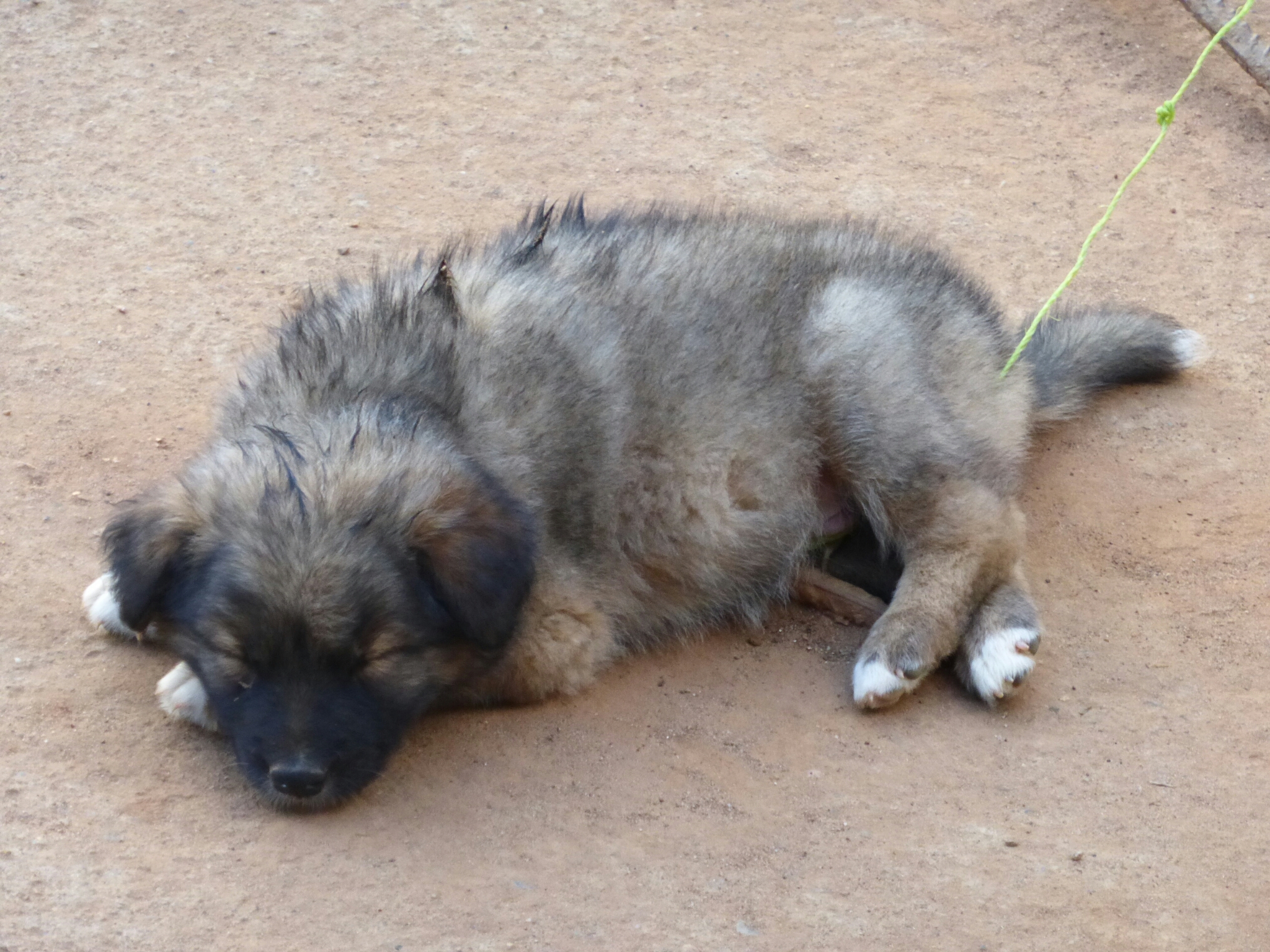
Our roommate called home just over 2 months ago to ask his wife if he could bring home a dog.  His wife, like most Rwandans, hates dogs.  But he talked her into it – since most people are really afraid of dogs, it is good protection to have one.jimmy sleep

Plus, he was an orphan… his mom had just been hit by a car.  We guessed that the puppies were about a month old.  He was christened “Jimmy” with the help of our friends.

For the first few days I wasn’t sure if he would make it – he just wanted to curl up in small spaces and hide, and didn’t interact much.  We gave him a lot of love and attention, and coaxed him into drinking milk and eventually more and more solid food.  He got lots of baths, because he was covered in fleas.jimmylaundry2

jimmy laundryBut Jimmy perked up, and is intelligent, sweet, energetic and playful.  He has grown a lot, and we suspect that he will get quite large.  I occasionally feel bad because Jimmy is probably better fed than most of the kids we see every day.
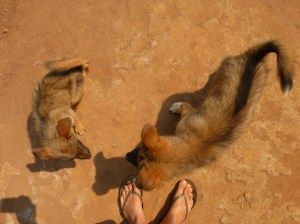
Last week our roommate saw Jimmy’s brother near our house, and coaxed him into coming into our yard for a reunion.

I almost wept.

I like dogs.  I can’t imagine adoptingjimmy feet dogs rescued from Mexican streets, or calling myself “mommy” to a dog like some of my friends, but I like dogs.
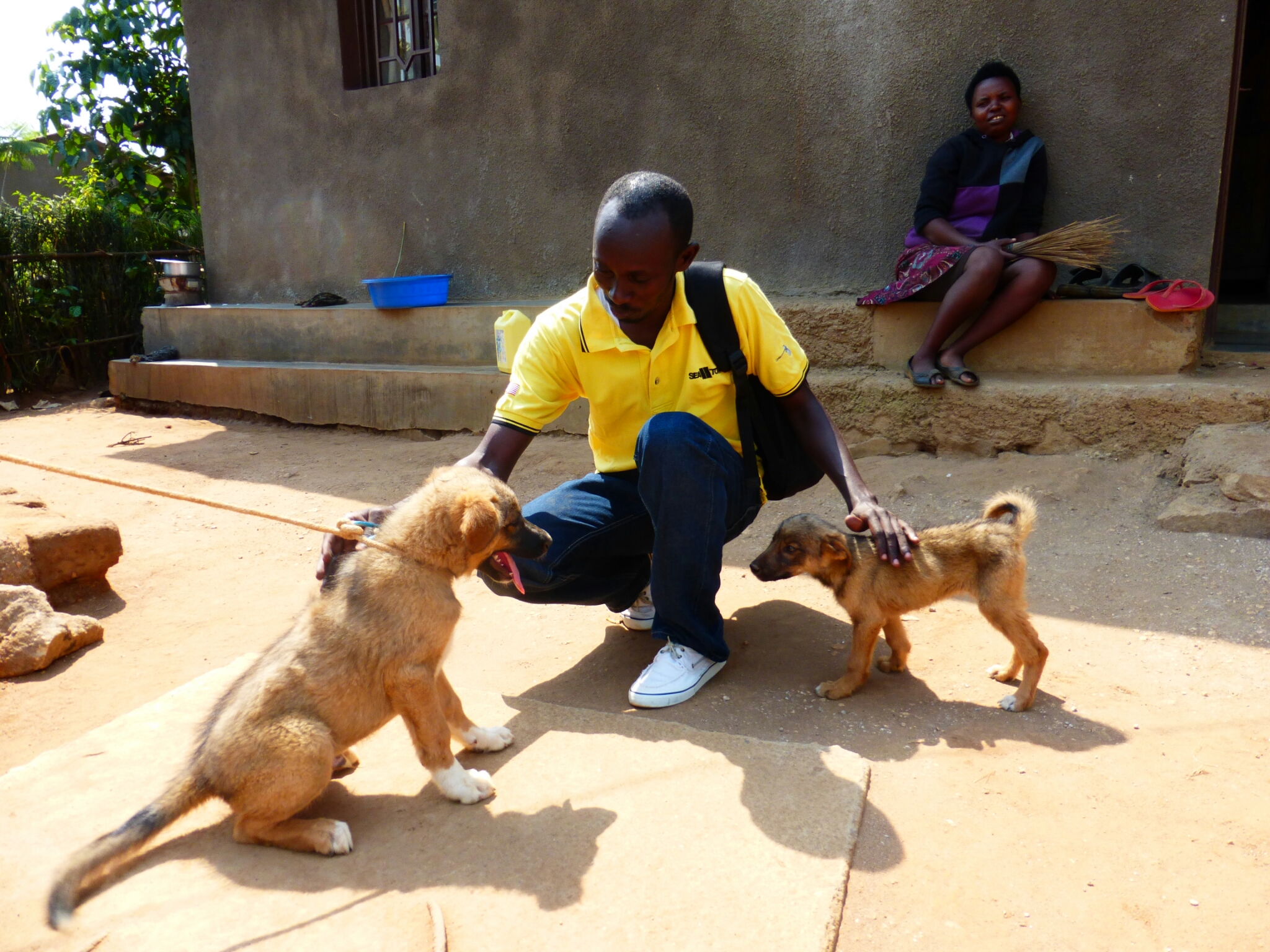
Jimmy’s brother was also sweet, but obviously not as well off… he was flea covered, about half Jimmy’s size even though they are the same age, and he moved so slowly – only as much as necessary.  Jimmy literally ran circles around him, wanting to play.jimmy sit

Mike and I tossed around the idea ofjimmy sniff seeing if we could adopt him, thinking he would be a great dog with a little care.  And I felt a little angry that people could care so little for their pet… but let’s be honest, they probably don’t have much to eat themselves.
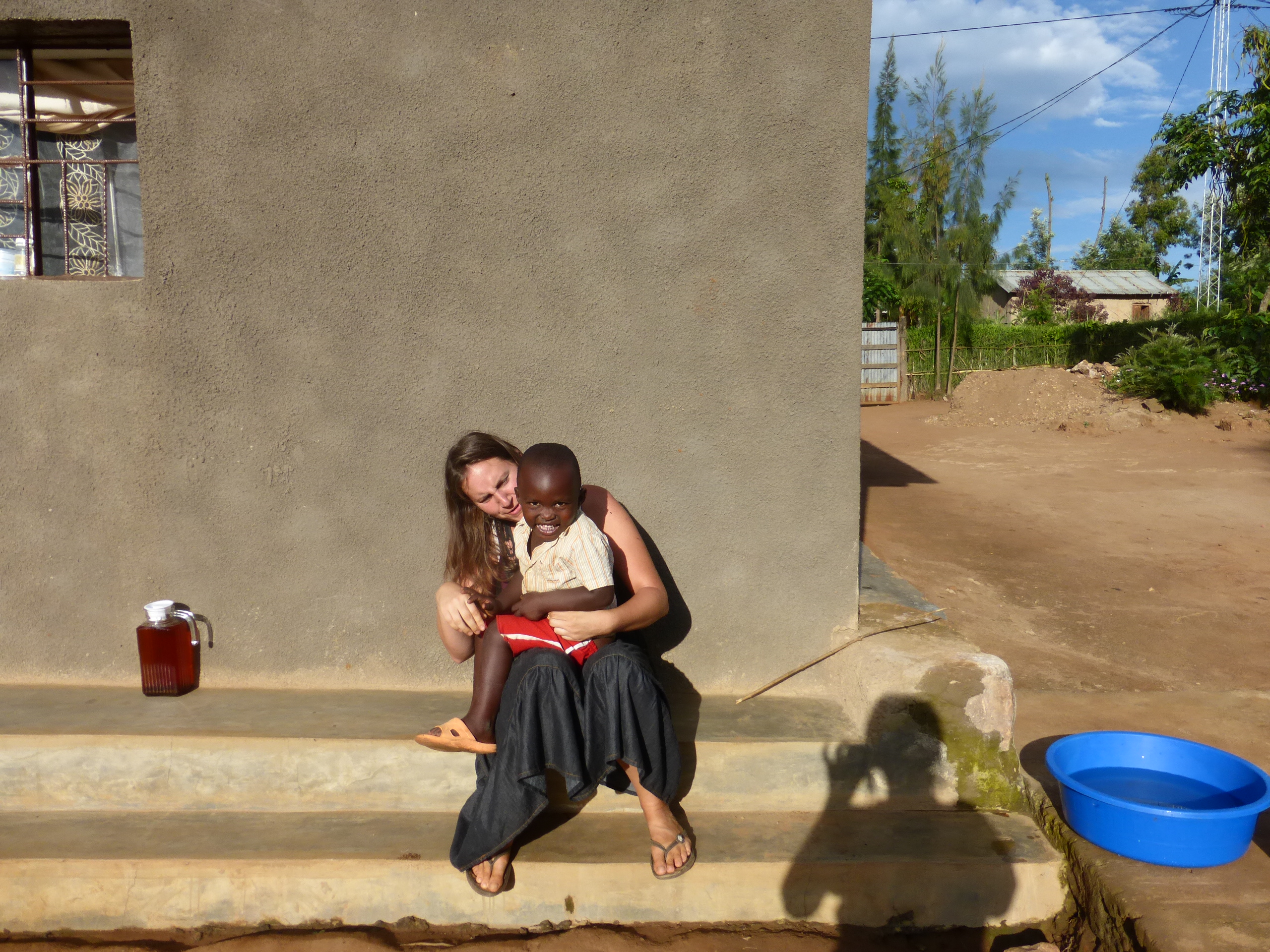
As much as I like dogs, I am really more interested in investing in the lives of people.  And this brought home to me in a very real way the difference between a well-nourished child and a malnourished one.  One of our goals is to improve farming techniques to increase nutrition – especially for kids and the most vulnerable parts of the population.  It has seemed like everything is happening so slowly (besides legal permissions, relationships and plants take time to grow), and this just made me more impatient to have an effect in this area.


Just like Jane Goodall…

When I was in my second year of university, the trajectory of my life was radically changed when I recognized that if I believed God was real and good, then I should actually follow Him.  But before that, I had a plan.  I was going to be a primatologist.  Yes.  I wanted to study apes.  (I find behavior fascinating – human and animal.)

I wasn’t initially interested in chimpanzees or in Jane Goodall‘s work.  However, the more I have learned about her, the more I have admired her.  She is an incredible communicator, and her messages are ones that we need to be considering.  (I don’t often give blanket book recommendations, but if you haven’t read any of her books, even if you aren’t remotely interested in chimpanzees, I highly recommend you read at least one of her books.)

She established a research base in what is now Tanzania in 1960.  It has continued for over 50 years, and expanded in that time.  Part of the reason the work has been able to endure is that she has had a great relationship with the local people who live near the research station.

When she first came to Africa, the idea of a single woman working alone was horrifying, so it was decided she needed a companion.  Her mother, Vanne, agreed to go with her.  During her time there, Vanne administered various band-aids and aspirin tablets to people who came to them for help.  This, more than anything else, secured the goodwill of the people living around them.


Now, obviously, our goals are a little different than hers.  But some of the ideas are the same – we would like to establish a long-term work that will have great effect, and one of the key factors is having the support and goodwill of the people we are working with.  I thought immediately of Jane Goodall one day when Pacifique, who delivers our water every day on his bike, showed up with a small gouge on his foot wondering if we could help?

(I also thought of my Dad – after we had taken first aid training, we used to gleefully fight over who got to take care of any mishaps that took place around our house.)

There have been other opportunities like that.  Our 8-months-pregnant neighbor had been having some issues, and the doctor had prescribed some medicine.  My roommate came and asked if she should actually take it?  My answer was immediately, “I have no idea.”  (I’m very comfortable dealing with minor scrapes or ibuprofen, but beyond that?  I think its a bad idea to give advice on things I know nothing about.)  But it turns out that sometimes, medicines are prescribed less carefully than I am used to.  So we asked Google, and it told us that this particular medicine was very unlikely to help her and was not necessarily safe for pregnant women to take.

Another neighbor’s (adult) daughter was ill, and she (the mother) had some antibiotics she hadn’t finished taking from the last time she was sick, could she just give her daughter those pills?

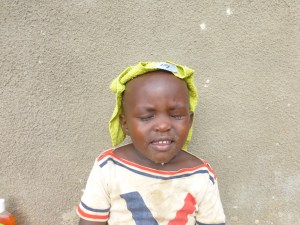
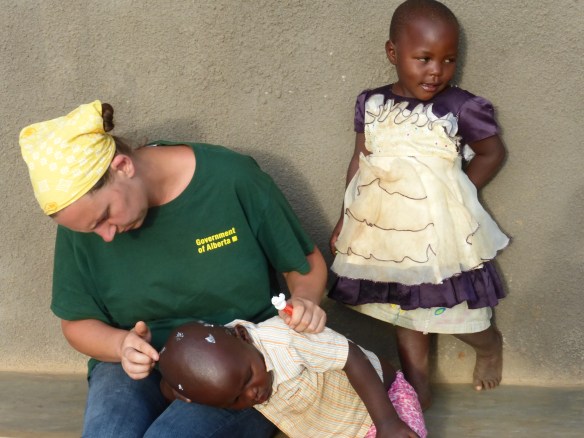
And of course, the never-ending skin infections.  Most people keep their kids hair very short, and the razors used to keep it that way are not always the cleanest.  Its common to see kids with many small, infected sores on their heads (and of course, flies crawling all over the wounds).  Our neighbor had a particularly bad case a few weeks ago, so I put some antibiotic ointment on all the sores for a few days.  It seemed to be getting better, so I left it for a few days, and didn’t see him much.  Then one afternoon we heard a giant ruckus from next door, he was screaming and screaming.  Now, there are many kids in our neighborhood, and they make a lot of noise, particularly since discipline generally means getting hit with sticks.  But this made us go see.

The small infections had gotten really bad again, so his mom was scrubbing at his head with a rough plant to try to get it clean.  Ouch.

"Close your eyes"

“Close your eyes”

So I started again, at least once a day, putting ointment on all the small spots.  I consulted our team’s medical expert (Anne, a nurse), and she suggested soaking a cloth with water and Dettol, and letting it sit for a few minutes to disinfect before putting the ointment on.


I’m sure it must have been at least uncomfortable and possibly painful, but he ran over excitedly and sat so still, every time, while I treated the sores.P1000383

It took a few weeks, much longer than I thought it should, but the last of the sores finally disappeared.

These are a few of the first-aid stories so far, and I am sure there will be many more.  We are believing that this is one small thing that will help people believe that we can be trusted, accepted, and are here because we want to work with them for good.

Iki n’iki? (Each-ey neech-y?)

(I wrote this almost 2 months ago, about 2 weeks after we moved, but took me awhile to get posted.)

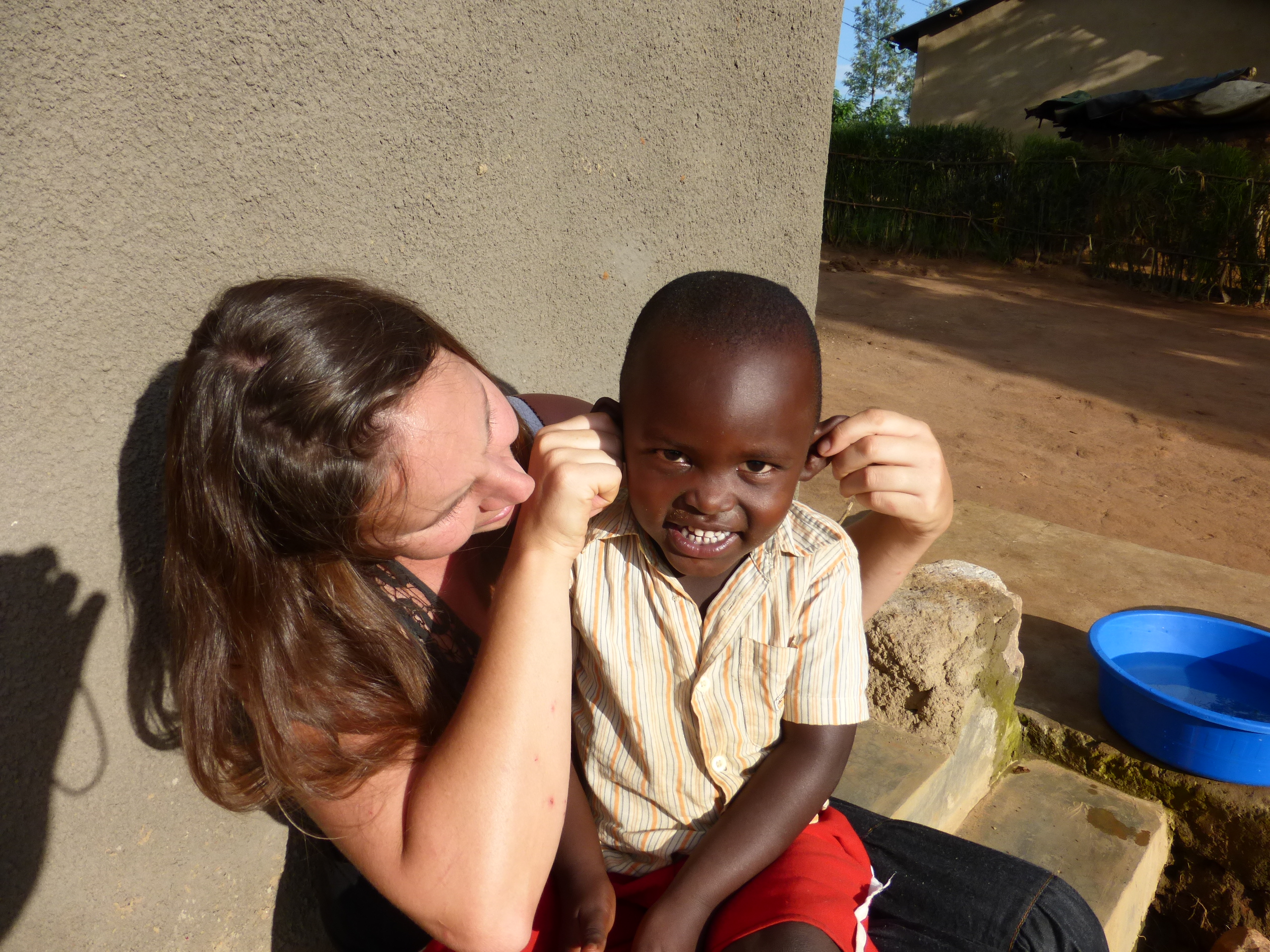
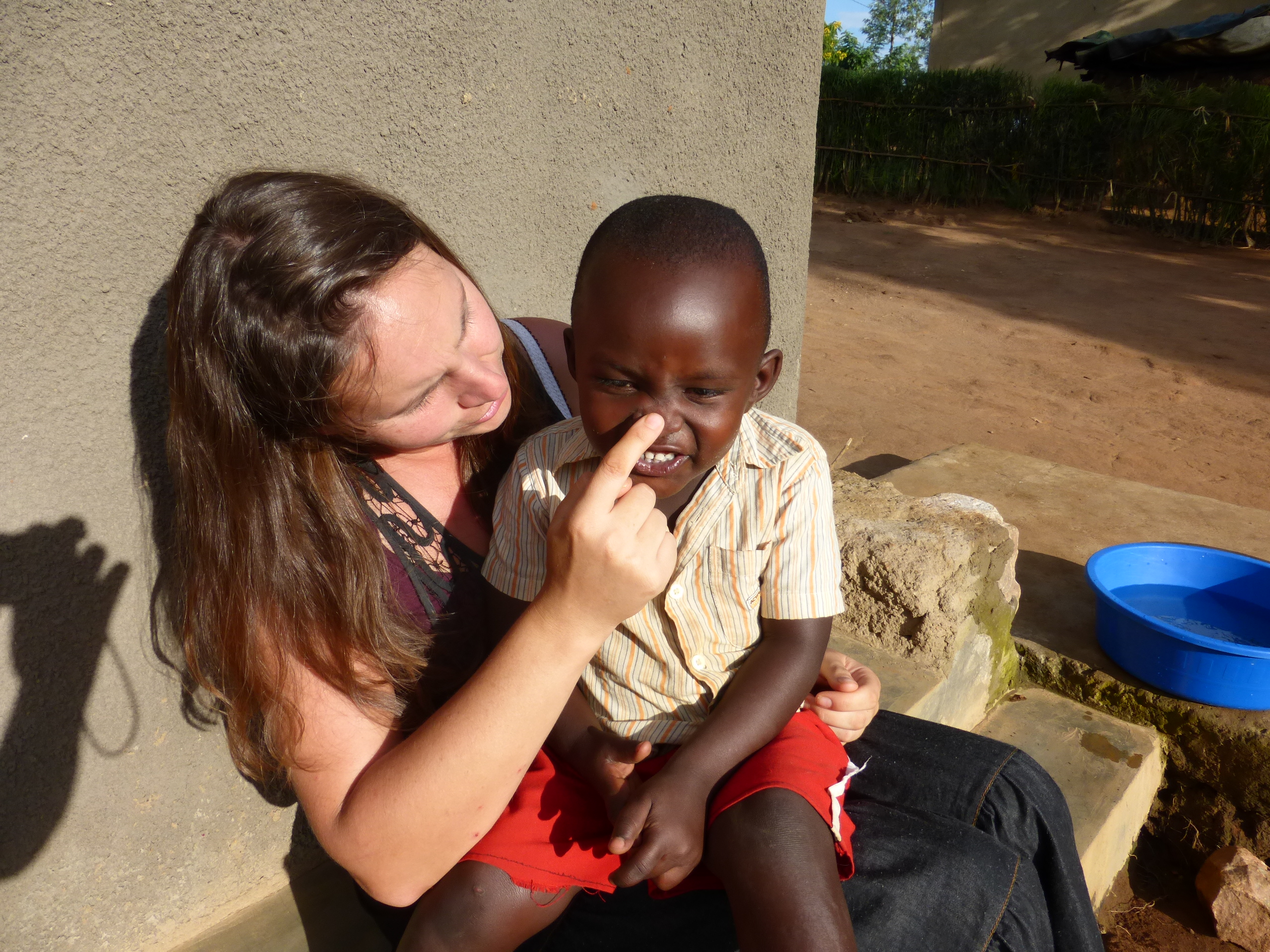
Slowly, we are making friends.  It is exhausting to have every child shout for a crowd (mzungu! MZUNGU!) every time we leave the house, so we are hoping people get used to us.  We’ve started with our neighbors: I explained to the kids on one side, (age 2 &4) in my halting kinyarwanda that I would appreciate it if they used my name, instead.  They didn’t quite get it, but their mom did, and she helped explain.  These kids and their mom & grandmother (?) are very friendly, and we have small conversations every day.  The 4-year old boy is especially enthusiastic! (Its nice because the girl on the other side hid and cried every time she saw us for the first week.)ch. laugh

He came over while I was washing dishes, and one of us asked “iki n’iki?” (What is it?)  He picked up every cup and asked, “iki n’iki?”

Now, this is the perfect game.  I can practice the words I know, and learn new ones, AND he is having fun!Ch. teeth

AmatweCh. nose

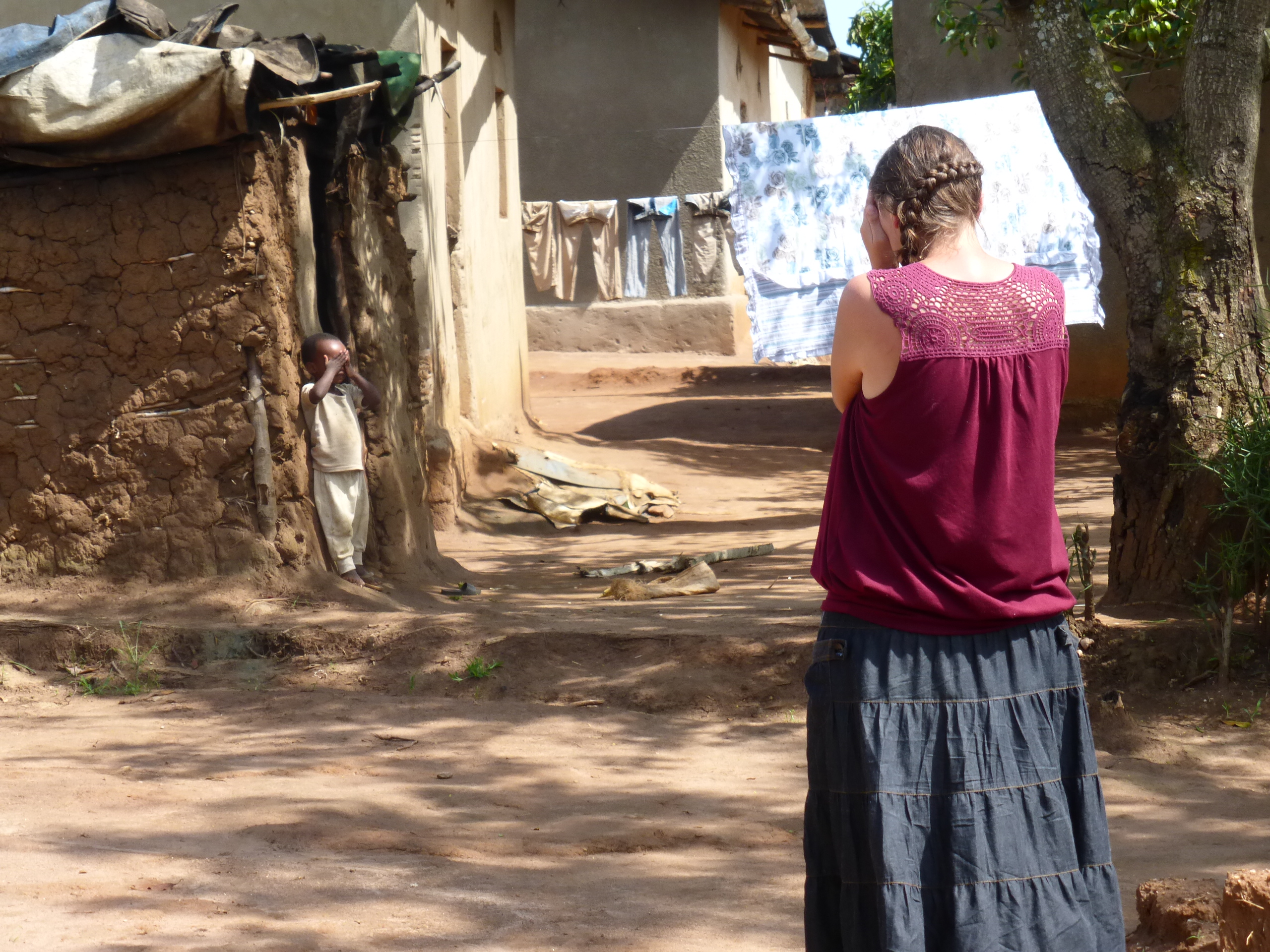
Update: the fearful little girl and I have since made friends, beginning with small games of repeating actions, from a distance

Update: the fearful little girl and I have since made friends, beginning with small games of repeating actions, from a distance


Food

I’m sure you all know that Mike and I love food.  We enjoy trying new things, cooking together, and eating really good food.

We enjoy Rwandan food for the most part, however, it gets monotonous very quickly.  Besides the privilege of wealth (neither of us has ever had to worry that we won’t have enough food), we are a little spoiled coming from a country where it is common to eat foods from many different cultures.  SO, making food that we enjoy becomes important for our ability to be here long-term.

We have been prioritizing in terms of appliances.  Our housemates have a fridge, but it is first priority when we move out.  We have been living without an oven, and we may get one in the future (they are affordable but not as high-priority for us as a fridge).  I have been content to live without an oven, because it means I eat less cookies, cake, etc, but I didn’t realize how many other things I use the oven for.

We got a high-powered blender for Christmas.  We use it every day,

yogurt, greens, pineapple, tree tomato, passion fruit, mango & bananas, yum.  If you can get past the way it looks, it is delicious & nutritious!

yogurt, greens, pineapple, tree tomato, passion fruit, mango & bananas, yum. If you can get past the way it looks, it  is delicious.

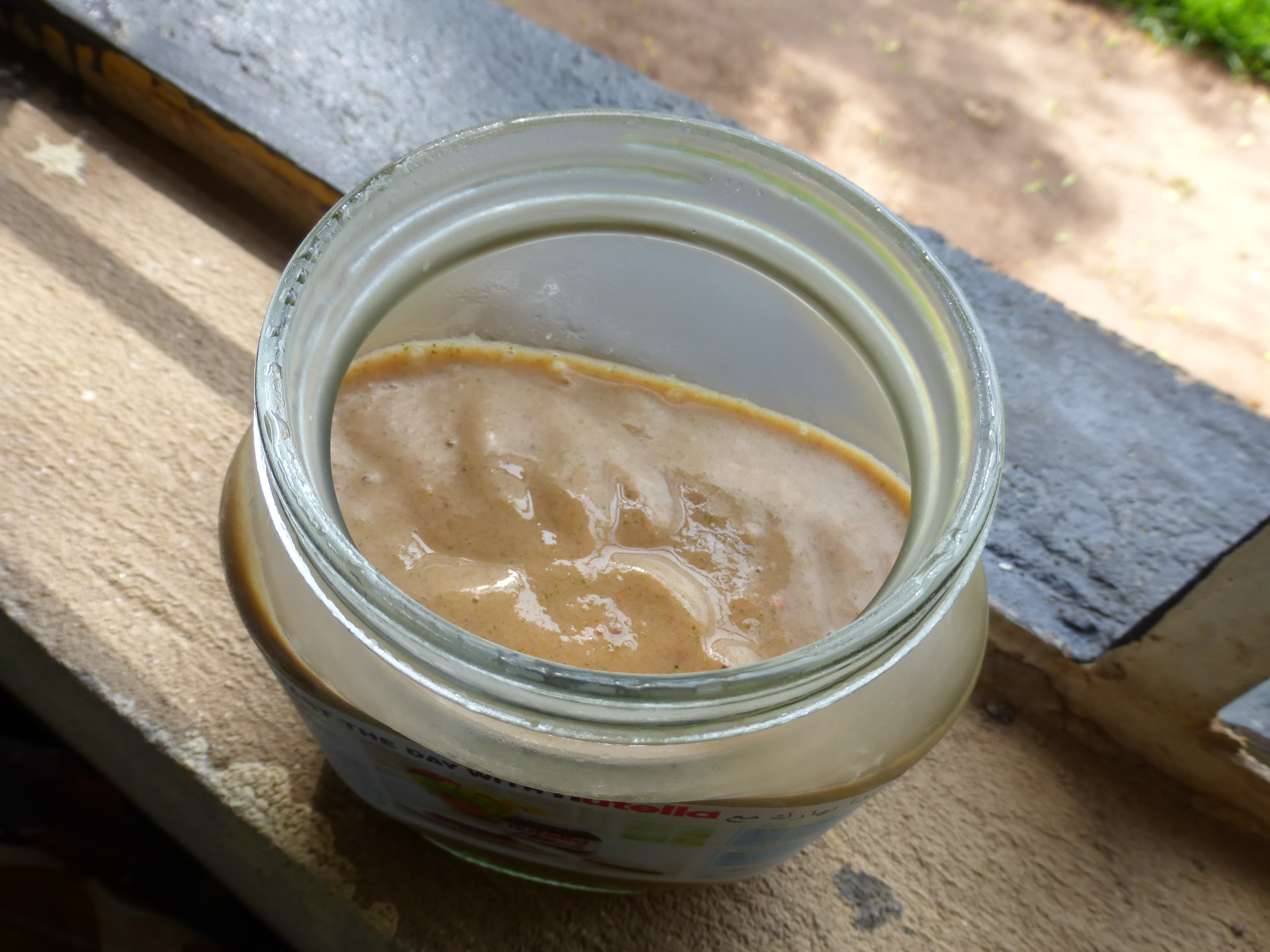
often more than once.  Primarily for smoothies – we can take advantage of the abundance of cheap, fresh fruit, so we have one, almost every day.  Besides that, it makes some tasks easier (have you ever crumbled bread crumbs by hand?), lets us do thing we wouldn’t be able to otherwise (like make peanut butter), and gives us the opportunity for some treats (frozen lemon slushy, coffee slushy, soft frozen yogurt).

There are a lot of things that we are able to get easily at home that are more difficult, expensive, or impossible to obtain here.  However, there is an abundance of fresh fruit and vegetables.  One obstacle is creativity (I’m running out of ideas for ways to combine tomatoes, onions, and green peppers), the other is time.  In theory, I love the idea that everything is made from scratch – it is much healthier, and tastes better.  But in practice…  first I have to go see what I can find today, which means checking all the shops – about half an hour to an hour, and often with mixed results.  There are few shortcuts, like a can of pasta sauce or mushroom soup.  (Or frozen pierogies – we’ve made them from scratch a few times and are getting better/faster.)

We get milk from our neighbor’s cow – we use it for coffee, sauces, and to make ricotta & yogurt.  (There is hardly any cream on it, but it tastes less like “cow” than a lot of fresh milk I’ve had.)

We are learning: where we can get different items, what we should stock up on in Kigali, and different ways to be creative with what is here. (For example, green beans are cheap and plentiful right now.  So far, we’ve thought of 5 different ways to eat them that don’t include baking.)  I don’t drool with envy as much at the seemingly endless stream of food pictures/recipes people post on facebook.  (Every once in a while, people even post something helpful.)  Slowly, this area of our life is getting to be familiar, manageable, and even enjoyable.