MZUNGU! MZUNGU! HOWAREYOU!!

Slowly, people are starting to get used to us.  Most days, Mike goes over to the YWAM smoothieland to work on the garden project.  He is gone before it is fully light so that they can take advantage of working in the cooler hours. (Started before 6 am every day, yikes.)  I usually go over a few hours later and take him a nutrition-packed smoothie for breakfast.
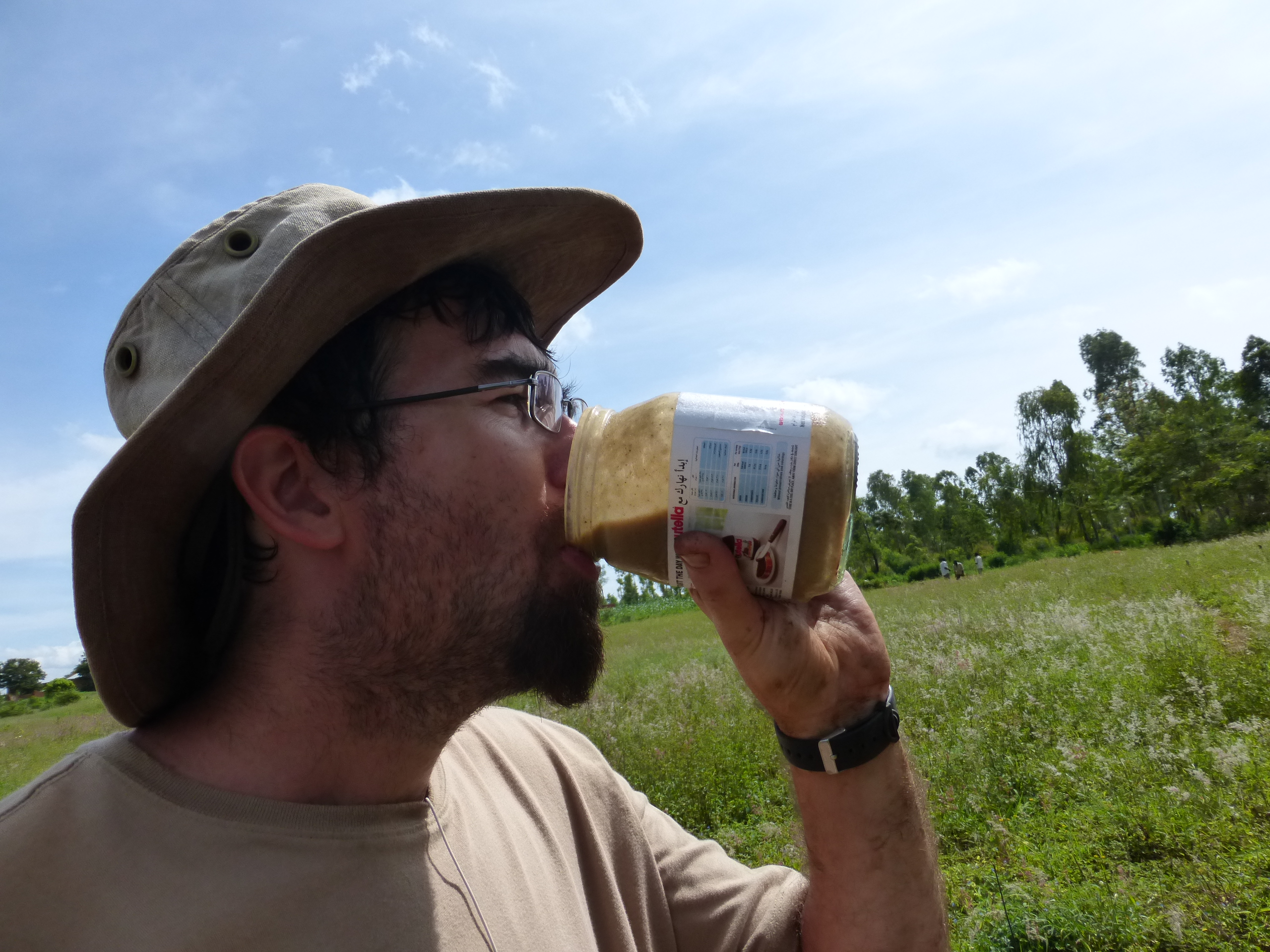
 

Its about 20-30 minute walk, one way.  Its a good excuse for me to get out into the community, interact with people on a non-threatening level, and to pray for the people and situations I observe.

I see many women (and children) carrying bundles of wood)

I see many women (and children) carrying bundles of wood)

He saw me taking a picture of the lady with wood, and wanted me to take one of him too, once he had his bundle loaded!

He saw me taking a picture of the lady with wood, and wanted me to take one of him too, once he had his bundle loaded!


And of course, everyone wants to greet me.  The more I learn of the language, the more I realize that when people call me “foreigner,” its really not an offensive thing – for example, in Kinyarwanda, I could just greet someone “girl” or “woman” or “hello, old man.”  (I can’t bring myself to say the last one, it feels rude to me.)

The kids get especially excited and shout “MZUNGU! MZUNGU!” so of course, all their friends come running.  Then they shout at me, in a sing song way “HOWAREYOU!” or my favourite, “Good morning sir.” They all want to touch my hand, partly in greeting but also because they expect that my skin feels different from theirs, so they want to touch it.
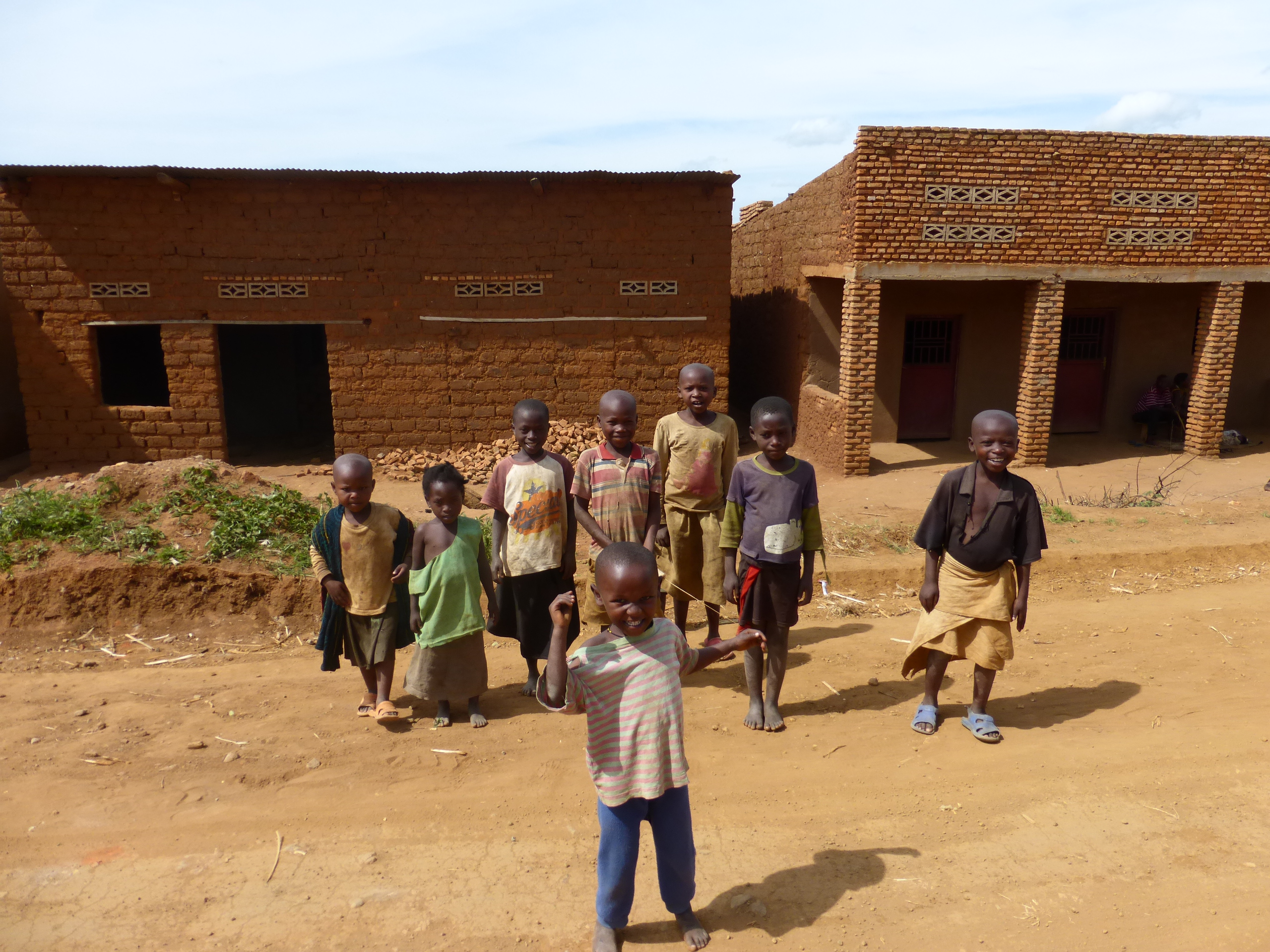
these guys all came over in a group

these guys all came over in a group

So I have taken to giving “lectures” to the ones that shout the loudest, the ones I see everyday, with my limited Kinyarwanda.  translated back into English, I think it goes something like this: “Kids, come here.  Listen: I don’t like hear ‘MZUNGU.’ (here I imitate their shouting) I don’t like.  If you want talk to me… come, say, Hello, or how are you, or good morning.  Stop say ‘MZUNGU.’  Understand?”   Then they all nod solemnly I greet them all, and smile my friendliest smile.

—they were all lined up singing or something, but stopped when they saw me with the camera

—they were all lined up singing or something, but stopped when they saw me with the camera

At least, that’s what I think I am saying. It seems to be working.  In general, the adults think its great fun that I can have small conversations with them, and I have been able to have a few really great conversations with people.

then they all gathered round to touch my hand one more time

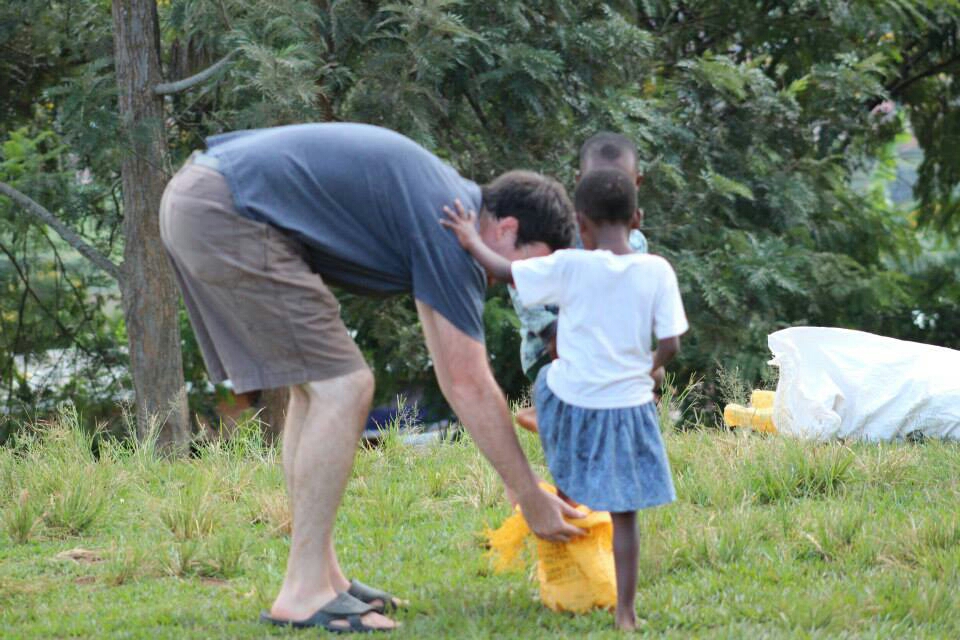
then they all gathered round to touch my hand one more time


Memorial Week

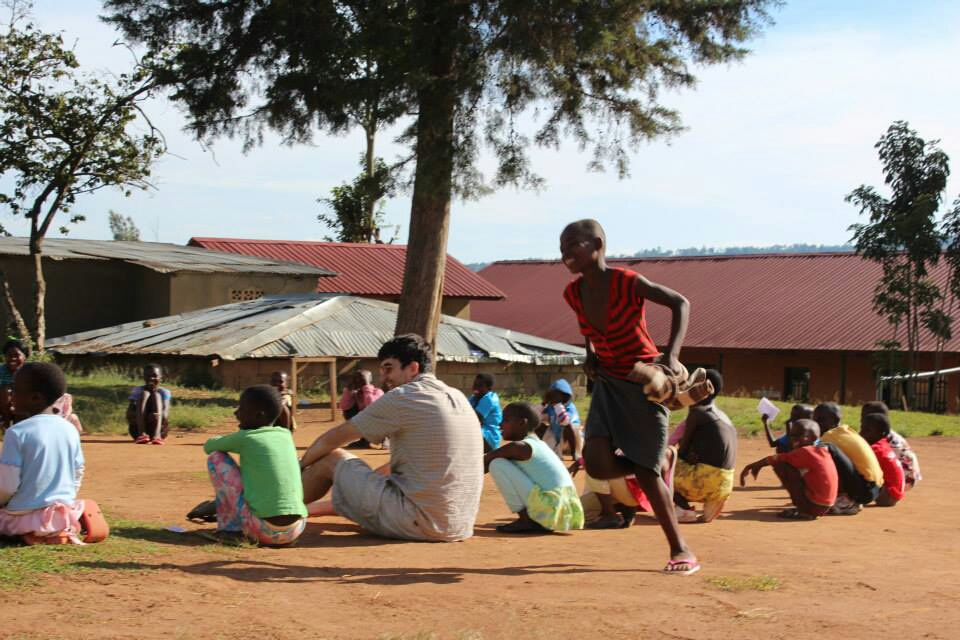
Mike and were in different places during the genocide memorial week. He really wanted to work with the Hagari ministries kids camp again,PicsArt_1397648216153 so he spent the afternoons all week planning, teaching, and playing games with aroud 100 kids. These are kids that are regularly involved with Hagari ministries, and many PicsArt_1397647990687of them are able to attend school because of sponsors through this ministry.


PicsArt_1397647010649

I felt like it was important to be in our new home during this time, even if I don’t know very many people. I am really glad I did.

On the first morning I was back in Ryabega, I met Sam on my way to buy groceries at the larger centre. Sam is someone who has been helping the project from its beginning: he is a man who is resourceful, kind, well-connected, ready to help, and a leader in this community. He told me that he had just been to visit a genocide survivor who had moved to this community. She felt safe here because it is mostly a community of people who fled the country to Uganda at various times, and returned in the mid-90’s. These were not genocide perpetrators.  She had no money and no family to take care of her.  An older lady had taken her into her house to live with her, but now she was experiencing old wounds (from the genocide) flaring up, and had no health insurance or money to go to the hospital. Now, I haven’t entirely got the health system here figured out, but I do know this: you can get health insurance for $5/year, and that entitles you to at least basic services.

Sam flagged down a bus for me at this time, so I went to get what I needed, but it stuck with me. I called Sam when I got back and said I wanted to talk more (and of course, he came immediately from what he had been doing). I asked him for some advice, and he said, “she needs health insurance so she can go to the hospital, and we should go visit.” So we did. Through Sam, I gave them some money for health care and a little food. We also had a really awkward visit, as Sam explained things alternately in English and Kinyarwanda. I keep reminding myself that these visits are important in this culture, even though they feel very strange and uncomfortable to me.

Sam asked if I was attending the community meetings, as if the answer would be “of course.” (Throughout the week, everything shuts down in the afternoon and people meet in their communities to hear the history and testimonies of the genocide. It is a time to remember and grieve together; and to support those who need it.) I have been interested in going to these meetings, but always felt that I would be an intruder.  So I asked Amiss (our housemate) if I could/should go with him, and he seemed to think it was a good idea. I went to a couple with Amiss, and at the end of the week most of our team went to the muchlarger community gathering with Sam. He introduced us publicly, explained that we were not there as spectators, but to show our support, and spoke a little about what we are planning to do.

I was really thankful for this opportunity to be with the community; to show support, and to learn more about the people we are working with.


Back to Kigali

The last couple weeks have been fairly eventful: Mike and I both travelled to Kigali to participate in ministry opportunities, and last week was the beginning of the memorial time marking 20 years since the genocide. I worked with the Discipleship Training School on their last week of lecture phase before they left for outreach in Uganda  This particular group was quite young in general, and contained 14 students from Kenya, Burundi, Tanzania, Rwanda, & USA.  I taught on public speaking, sharing testimonies & the gospel, outreach expectations, and of course, teambuilding and all of the things that come up in the course of these challenges. I really enjoy teaching this kind of thing because it helps people see the transition phase between what we learn and what we do.  Are we kind when we are under stress?  Do we critisize and complain?  Do we rise to challenges or want to give up quickly?

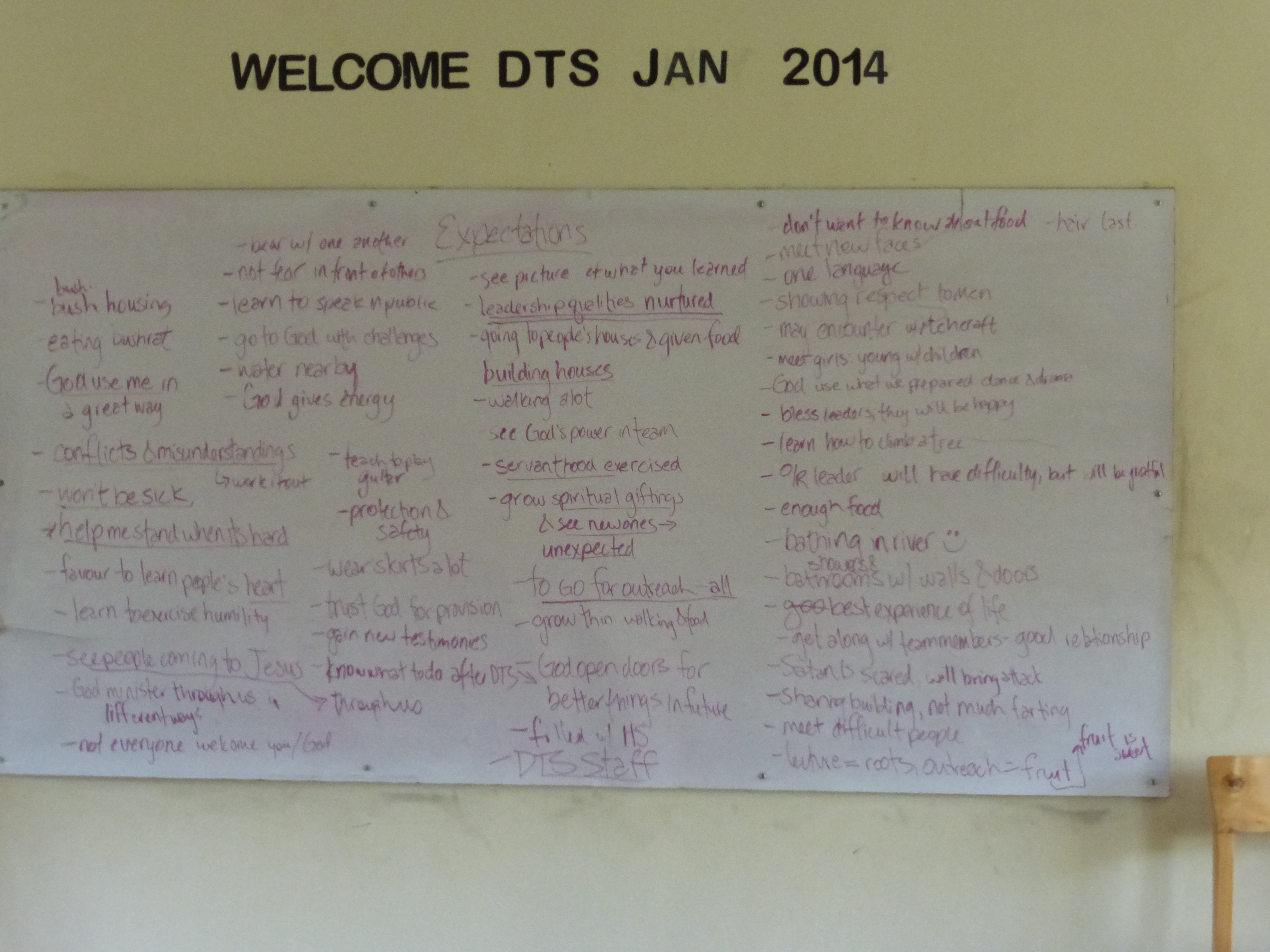
the team's expectations for their outreach in Uganda

the team’s expectations for their outreach in Uganda

Working together to accomplish a challenge (getting the ball to a certain point without letting it fall)

Working together to accomplish a challenge (getting the ball to a certain point without letting it fall)

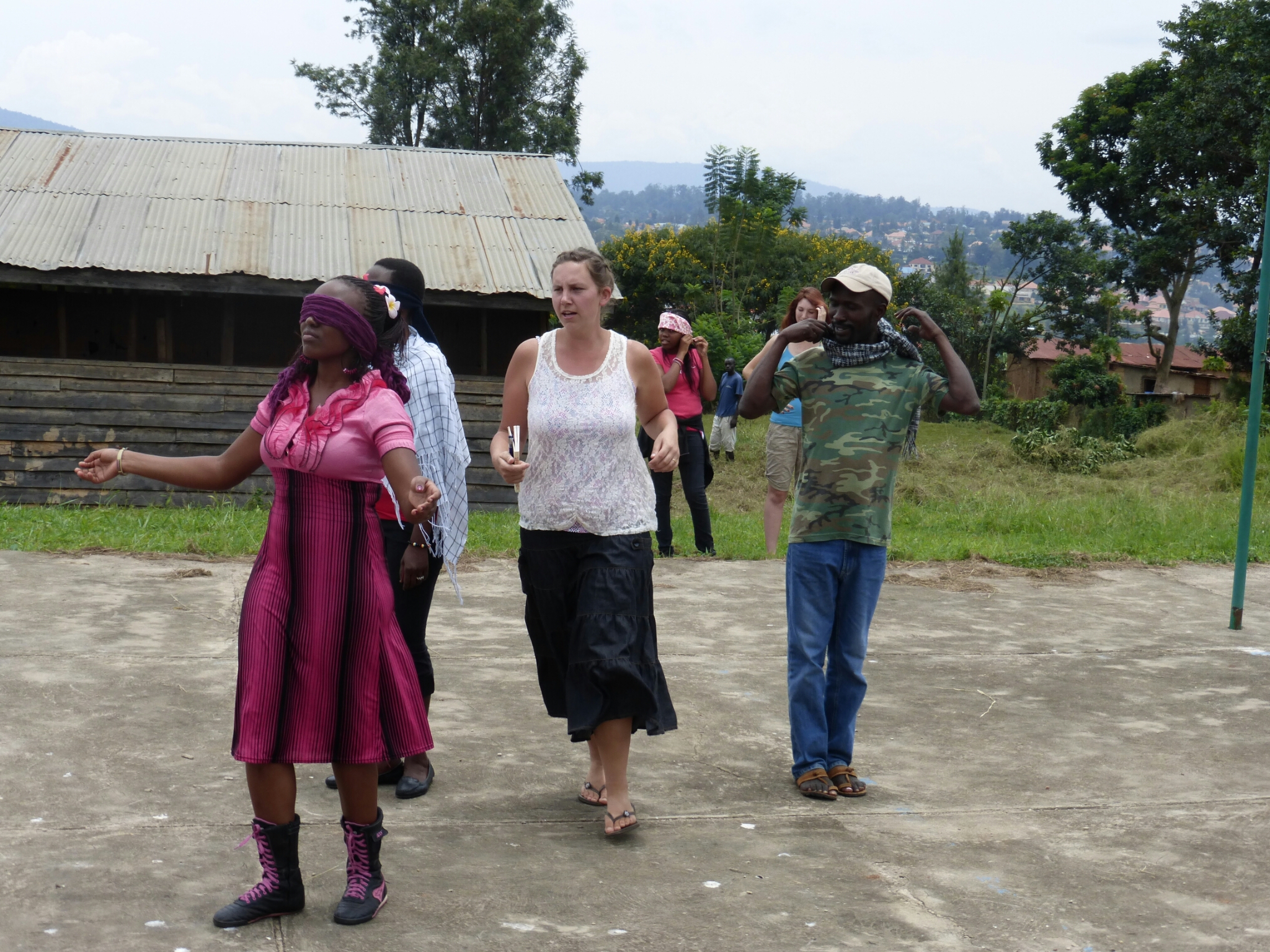
team blindfold challenge

team blindfold challenge

Explaining the challenge (I always look so angry in pictures where I'm talking... it makes me wonder if I look that way when its not stop-motion.)

Explaining the challenge (I always look so angry in pictures where I’m talking… it makes me wonder if I look that way when its not stop-motion.)

And of course, our time involved food!  We both got to help the Kigali base prepare and serve a big celebration meal: to send out the DTS team, welcome a South African outreach team, and say farewell to Emmanuel, the base cook of many years.  (He will be sorely missed.)

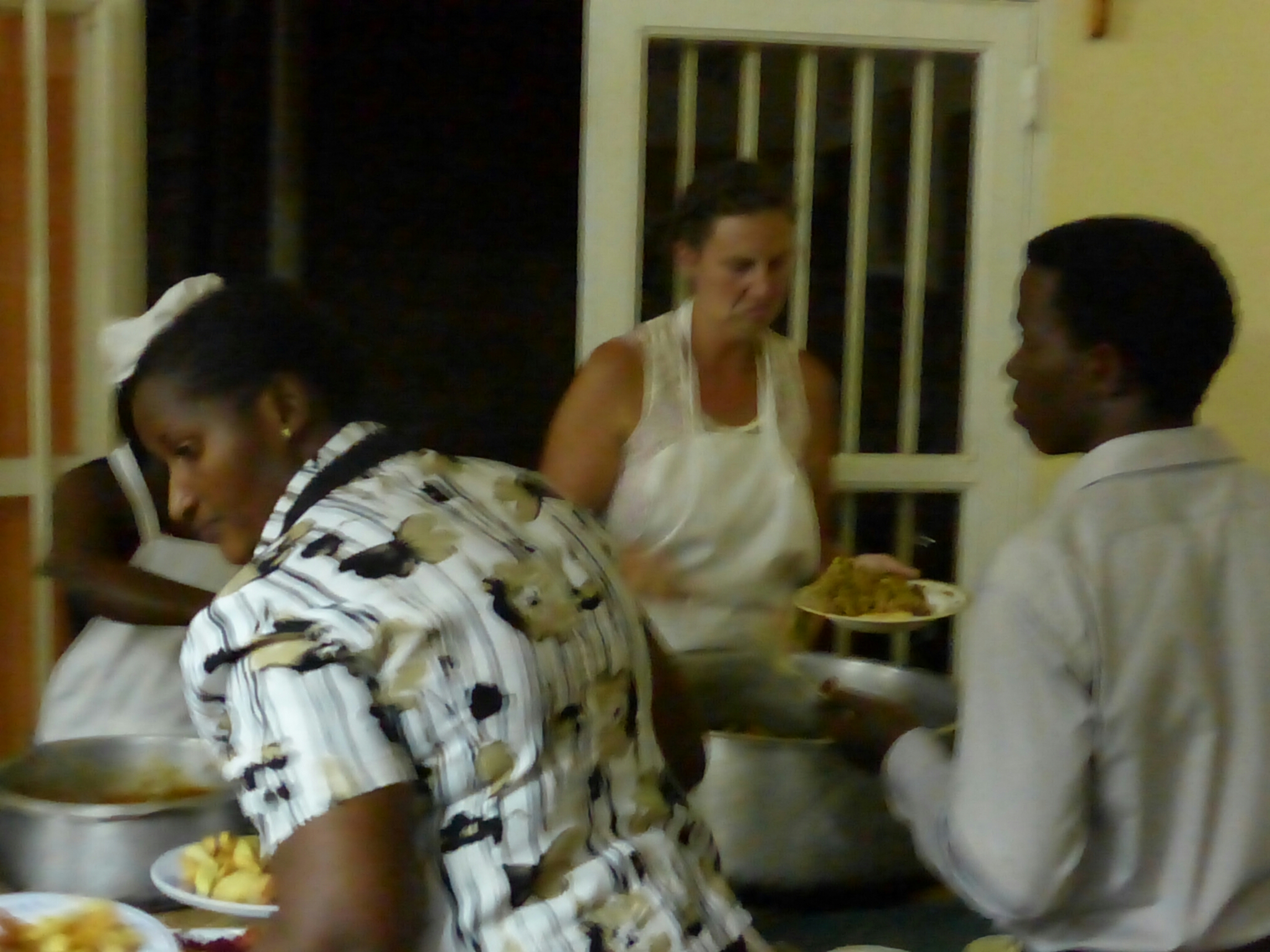
serving food (doesn't my wonderful husband take such flattering pictures of me!?)

serving food
(doesn’t my wonderful husband take such flattering pictures of me!?)

Mike was able to teach another cooking class with Hagari ministries.  This time it was bread.  (Bread had been their request, even though they don’t have an oven at home, so won’t be able to replicate it.) More about the memorial week coming soon…

moved!

We have finally moved out to the village!

We have been able to move right into the small village we will be working in, walking distance from the project land.  For the next months we will be living with Amiss and Marieth, a Rwandan couple who moved from Kigali to be part of this project.  They have generously let us move into their house. I’m not sure how to describe it to you: its a luxury mansion by village standards, with our fridge, multiple bedrooms, and indoor toilet, but significantly different than what we are used to in Canada-no running water,  bare cement floors, and buzzing beetles dive-bombing us at night.  I guess beyond that I’ll just say that we are thankful to be here!  This arrangement works well because it provides Amiss & Marieth with some rental income, and allows us to live somewhere IN Ryabega while we try to figure out what to do about housing long term.Amiss & Marieth's house

We are the only white people here so far, and everyone seems to know us- on the second day I got a little disoriented, and a lady I had never talked to saw it and pointed me in the direction of my home. 🙂

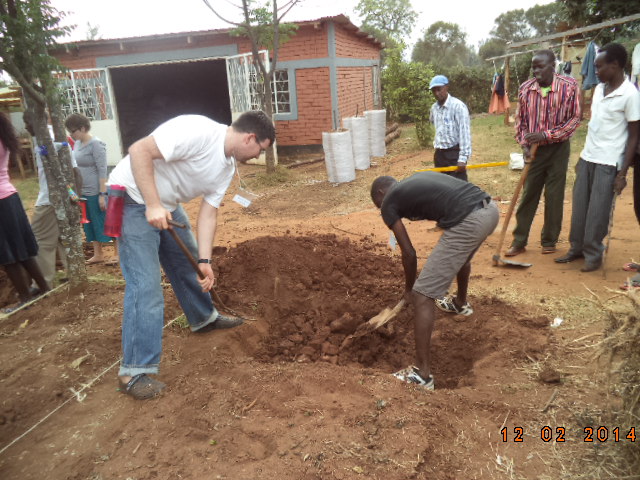
Mike has started digging beds and planting: we are a little late, but think it will be ok.  I have been trying to communicate with people in my limited Kinyarwanda while I walk through the village and pray.  People are mostly amused and friendly.  We have been organizing our stuff, trying to work out the kinks as roommates from different cultures, and collecting rainwater when it starts to pour (you know, so we can do laundry and bathe, things like that).  Bohoro bohoro (slowly by slowly), we will get settled in.

house n mike


Kenya… dig it?

As many of you know, I (Mike) just returned to Rwanda from a month-long adventure in Kitale, Kenya learning about agriculture and nutrition. I was a student in an OATS (Organic Agricultural Training Seminar) with an organization called Organics 4 Orphans. murals 2My initial reason for attending was to learn how best to grow gardens and crops in the rich, clay dense soil of Rwanda, which is so much different then the sand, loam, and silt soil of Saskatchewan. However, I was drawn into much larger and longer term concepts of growing health and growing soil. The idea is that in order to grow good food and make use of all the good nutrients in food, one first needs to have good soil.  In order to have good soil you have to understand the living things involved: bacteria, bugs, molds, fungi, worms, nematodes and more.  I learned about how they interrelate, and how I can work to encourage this living network to create healthy soil.  As well, I wasn’t just learning for my own knowledge, but was taught how to teach others what I’ve learned in order to multiply the understanding of the value of land and its ability to produce so much here in Rwanda. DSC01054 Some of the exciting things I learned that I am bringing back to Rwanda include a more comprehensive understanding of composting, worm composting, manure fertilizing, and green manures. (At least, I’m excited about these things!)  As well, how to grow intensively in small plots of land… which will go far to help the widows we will be working with to support their families and communities.

Like mother, like daughter.

In our line of work, we meet so many individuals that we don’t get to spend nearly enough time with.  Its encouraging to know that they are out there, doing really interesting and amazing things, but we would love to be able to spend more time with many people.

When we left Blackfalds in 2012, there was a great group of students, but we only spent a little time with them.  But, while in Canada this winter, we got to visit with one of them in Blackfalds.  During the short visit, we found out she (Selina) was going to Kenya with a team for 2 weeks.  I told her, “Kenya is so close, you should come see Rwanda”

So she did!

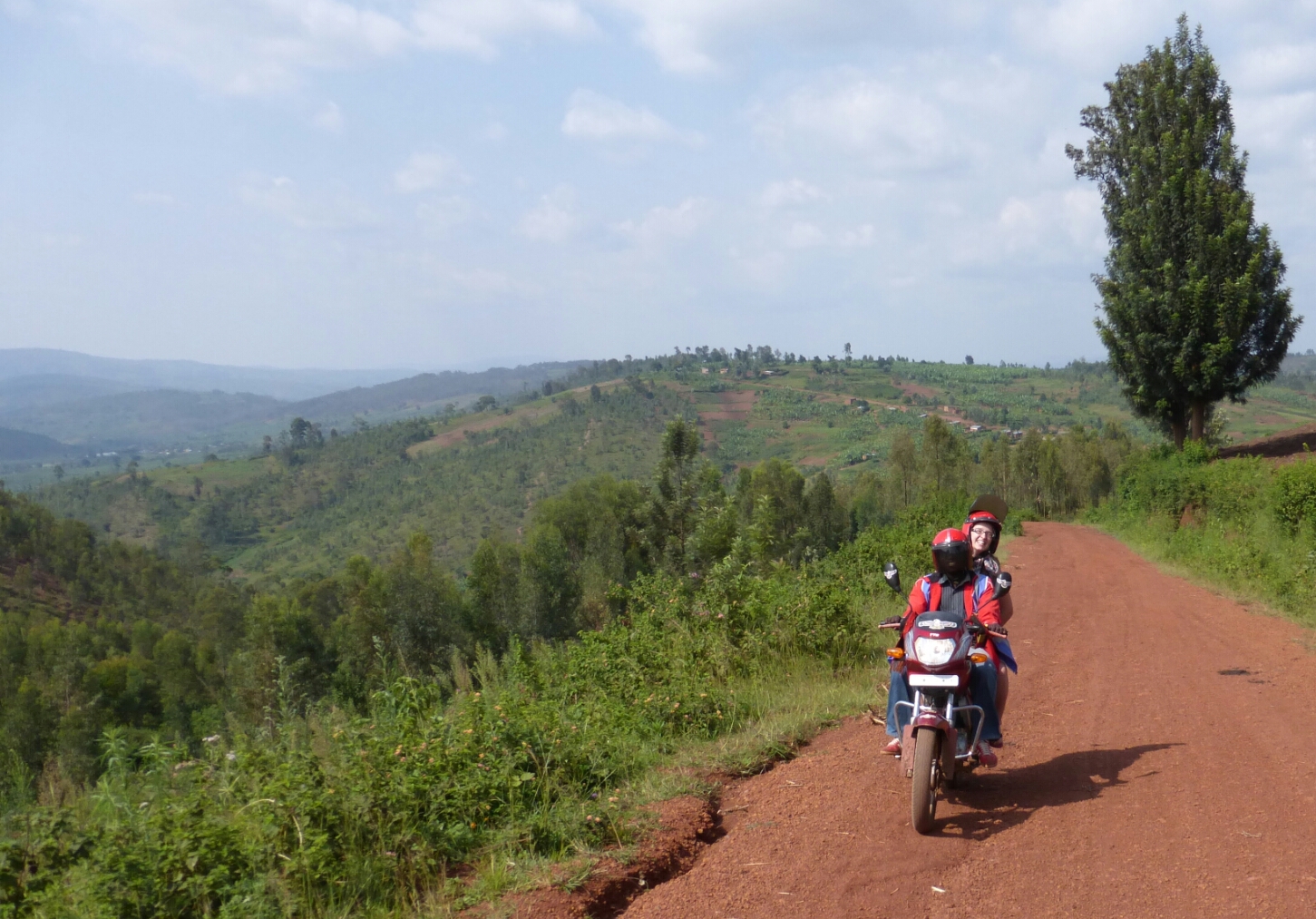
Selina arrived just a couple days after Mike left, and stayed for 2 weeks.  I arranged a few opportunities for her to work with different ministries, but mostly she came with me for the things I was doing.  We visited friends here in Kigali, we went to the market, we helped plan a Valentine’s party, we visited the genocide memorial (more on that later), she came with me for encouragement as I tried to drive a standard with opposite hands, we did umuganda, went to Nyagatare, and visited a friend in her village who is getting married soon.

Betty is getting married soon.  This s her in front of her house.

Betty is getting married soon. This is her in front of her house.

(sidebar: I’ve just learned that there are at least 3 words in kinyarwanda that mean visit – one is to see incidentally, one is to visit for a reason, and one is to visit for the sake of friendship.  It speaks of the importance of visiting.)

Betty's village is off the main road...

Betty’s village is off the main road…

Selina is a fantastic young woman who has a heart and ability for missions.  It was good timing for her to come, because I had time to spend working with her; to encourage and be encouraged by her.

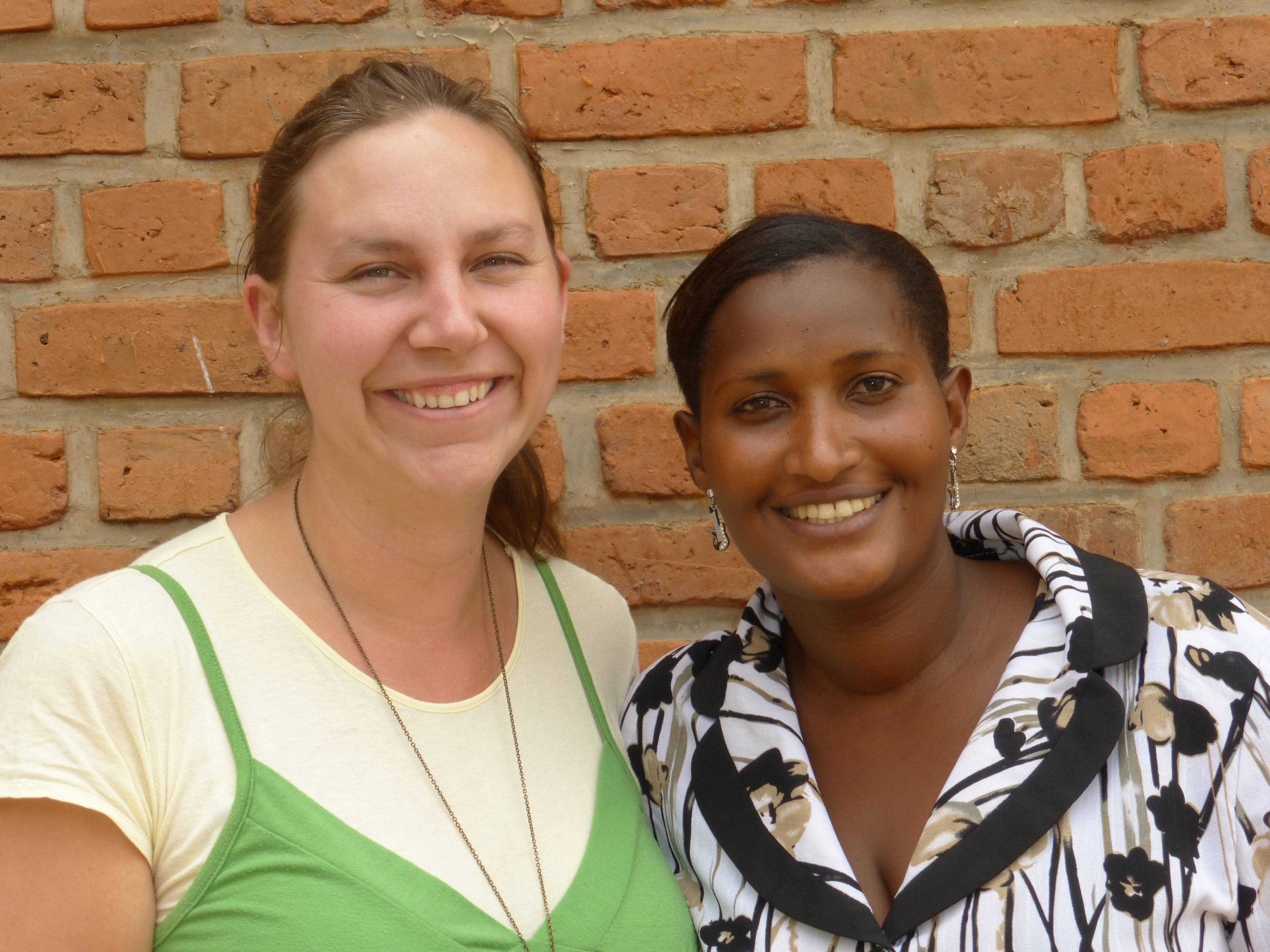
Only one thing made it a little difficult:  everyone thought that she was MY DAUGHTER!  Have you ever laughed at the idea that all white people look alike?  Well, other cultures use different cues to recognize people… so to many Rwandans, all white people look alike.  I’ve encountered it quite a lot in the last weeks -but still, my daughter!?!

See the family resemblance?

See the family resemblance?

Returning

We are back in Rwanda!  (Ok, well, technically, am back in Rwanda, but more on that later.)

We had such an incredible time in Canada – we had much quality time with our family, many opportunities to speak and show pictures, ate a lot of meat, got to make espresso at After the Grind, and we were able to visit with many dear friends.

Two days after we returned to Rwanda, Mike went to Kenya.  He is in Kitale, taking a one-month course with Organics 4 Orphans.  The course focuses on different aspects of agriculture that will be helpful to us in Mutara: increasing yields, nutritional education, compost, using natural medicines, and income generation.  It was a difficult choice for him to go, but we believe that it will be the best thing in the long run.

I am in Kigali for now, travelling back and forth a few times to the village in Mutara to find out what is going on, and start to make some decisions regarding the ministry and our personal accomodations.

P1000036

“In my culture, you can’t let someone go on a trip without giving them food”
So Amiss & Marieth made one more yummy meal before I came back to Kigali from the village.

Most of what I am doing right now is visiting people – listening, talking, praying, and helping with small things.  The women in this culture do not become friends quickly, but through persistence and working together (and a lot of grace on their parts), I have made several good friends in the last year.  In addition to the benefits of friendship, these women help me learn more about how to act in this culture, and friendship enables me to help and encourage in the incredible work they do. I wasn’t sure what would happen after being gone for several months – would I be starting over?  

It has been wonderful to discover that these relationships can be picked up where we left off, that I haven’t been forgotten and I am still trusted.  I am so thankful for each of my friends, and for the ways that we can help each other create change in this world.P1000050

Your English gets badder and badder.

The title was taken from a Facebook page, “You know you’re a YWAMer when…”  This one especially made me laugh because it is very true: we spend a lot of time attempting to communicate with people for whom English is a second language.  It can be very frustrating at times, and so proper grammar & definitions are generally left behind in favour of having a greater chance at communicating effectively.  We end up speaking a kind of pidgin (combining North American English, British usage, Swahili, Kinyarwanda, and some peculiar African uses of English words). We are looking forward to seeing many of you soon.  Yes, we know that we sound goofy.  For your amusement, here are some of our most common bad Englishes:

Now now:  It means immediately, or right now, as in “Do you want me to do that now now?”

Too much:  People here use this when what they actually mean is “so much.”  I initially often tried to explain the difference but when it seemed futile, I adopted it.

Slowly by slowly: this is a direct translation of a Kinyarwanda phrase that means something along the lines of, “over time we will accomplish something big.”  As I am writing this, I am realizing that I think the proper English equivalent would be “little by little.”

biscuit: cookie

Mop means something very different here.  To clean the floors, you pour a bunch of soapy water on the floors and then use a long-handled squeegee to push it out the door.  Its a skill we have improved at but have yet to master.

I’m coming:  This one is crazymaking.   It can mean anything from “I’m almost there” to “I’m going and coming back” to “I’m thinking about coming.”  Ugh.  (But again, I’ve been using it, because I can say it in Kinyarwanda or English to communicate a wide variety of things.)

This is just a sampling of funny things that we’ve noticed.  We have one bonus odd thing in our non verbal communication:  When you hug a Rwandan, you sometimes touch cheeks 3 times and ALWAYS shake hands after.  This has made for a very funny year of awkward hugs for us.  But we have finally gotten better at judging what situation merits which hug, and the handshake has become automatic.  So when you see us again and notice our hand twitch towards you before we remember and jerk it back, feel free to laugh with us.

Next year

I think most of you have heard by now that we are planning to come back to Rwanda after visiting friends and family in Canada for a few months!  We are excited to return to this land and looking forward to a new project.  The people we have been working with have been very affirming and encouraging as we prepare to say goodbye for a time: it has helped us see that we have had an impact here.

Originally, we had hoped to move to (U)Mutara and work with a Dutch couple that had many years experience in missions and had lived in Rwanda for several years.  However, they were forced to leave Rwanda suddenly due to health issues almost 2 years ago.  So when we planned to come to Kigali, we prayed that sometime during this first year, the Lord would send someone so we could be a team heading to Mutara together.

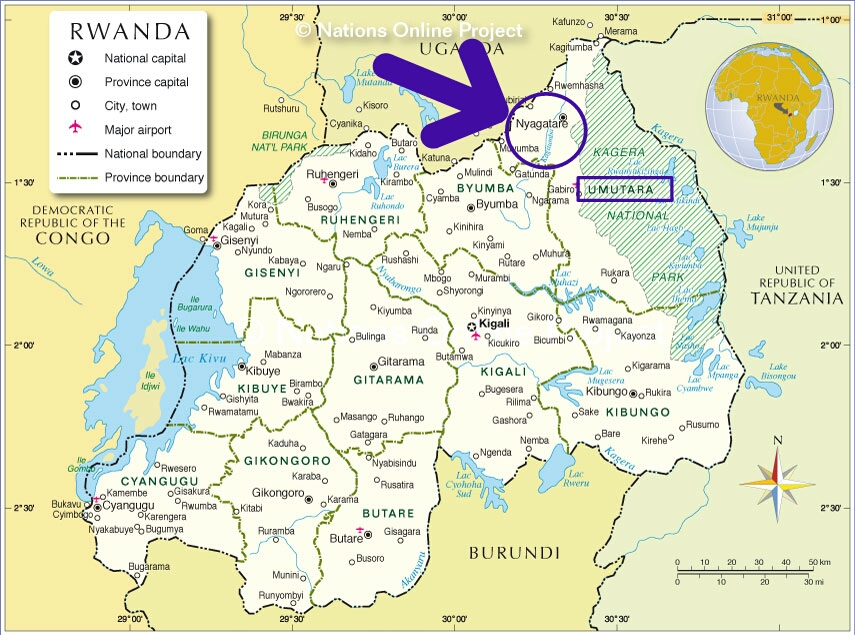
(U)Mutara is the name of the region, Nyagatare is the large town we will be living in.

(U)Mutara is the name of the region, Nyagatare is the large town we will be living in.

We were quite surprised when 2 couples from Europe arrived the second week we were here and announced their intentions to come back and work on the Mutara project!  (One couple arrived last month, and the second couple will be arriving in January with their children… Click on the links to learn more about them – one site is in Norwegian but they told us Google translate does a pretty good job!)

In addition, a Rwandan couple who got married last December and then took part in the DTS beginning in January will also join us.  We have seen their practical skills and value, and could go on and on about what they will bring to the team (translation, health care skills, cultural advice, counselling skills, ability/desire to serve, wisdom, experience working with people with HIV/AIDS, etc, etc), but we are so thankful because they have also become very good friends in the last year.

We are working on a name and an official description of what we will be doing.  YWAM has already purchased the land, drilled a well, and installed pipe up to water holding tanks.  Originally the plans were for a kind of children’s village, but with the changing laws where the government wants to have each child in a home, that has become impossible.  A broad heading for what we are hoping to accomplish there is community development.  One of the first tangible things to be established will be a health clinic.  (Anne is a trained nurse, and Amiss has some primary health care training.)  We are planning to work on some agriculture techniques, natural medicine training, and some small business opportunities particularly arising out of that.  (I hesitate to say natural medicine because of what it means in the west, but some of the main things for this project include simple nutrition and sanitation, alternative malaria treatments/malaria prevention & lessening the overuse/abuse of antibiotics.)  We are planning to do some programs for youth and young adults, and to eventually start a preschool.  Once somewhat established in the community, we are hoping to do some training in parenting (the idea of being involved in your child’s development is new here: kids are left with a low level even of supervision, and beating them is the common way to communicate that the child has made a mistake).  We also want to remember that the project was started to see the lonely in families, and so we want to identify ways to help the most vulnerable children both directly (ie, through food aid and seeing orphans placed in families) and indirectly (ie, through parenting, nutrition, & medical education for the community in general) in co-operation with the new laws.

As a team, we have many big ideas, and we are looking forward to seeing them in practice!